
THE PAST WEEK
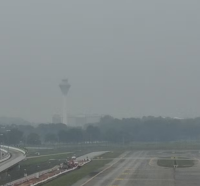
ASEAN countries step up efforts to combat transboundary haze
ASEAN is moving towards strengthening its regional mechanisms through improved coordination and emergency response capabilities. Read more.
Summary: Singapore will accelerate efforts to establish the ASEAN Coordinating Centre for Transboundary Haze Pollution Control during its 2027 ASEAN Chairmanship, strengthening regional cooperation in preventing, monitoring and responding to forest and peatland fires. Announced on 3 November 2026 by Singapore's Minister for Sustainability and the Environment, Grace Fu, the initiative forms part of broader efforts to improve the implementation of the ASEAN Agreement on Transboundary Haze Pollution.
Signed by ASEAN member states in May 2025, the agreement establishing the centre will enter into force once at least six members complete their ratification or approval procedures. Singapore plans to submit its instrument of ratification in the coming days, while encouraging other member states to follow suit. Once operational, the centre will coordinate emergency assistance between member states and facilitate the sharing of firefighting technology, expertise and resources. Vietnam has already completed its approval process, marking progress towards bringing the regional mechanism into operation.

Google invests USD 160 million to water infrastructure in Negeri Sembilan
Google's investment highlights how Malaysia's growing data centre industry is driving demand for supporting water infrastructure. Read more.
Summary: Google will invest USD 160 million (approximately RM651 million) to develop shared water infrastructure in Negeri Sembilan, supporting both local communities and its planned data centre campus in Port Dickson.
The project, to be undertaken by Gamuda in collaboration with the state government and Syarikat Air Negeri Sembilan, will involve the construction of an off-river storage reservoir and a water treatment plant with a planned capacity of 65 million litres per day.
The facilities will be owned by Menteri Besar Negeri Sembilan (Incorporated) upon completion. The reservoir is designed to capture excess river water and rainfall, helping to improve water availability and mitigate flood risks. Google has also committed to covering the electricity consumed by its data centre campus and the direct costs of connecting it to the power grid. The investment highlights the importance of developing supporting utilities alongside large-scale digital infrastructure projects.
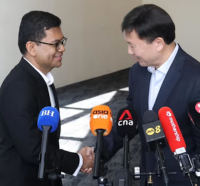
Johor-Singapore Special Economic Zone (JS-SEZ) records RM 88.83 billion in approved investments
The JS-SEZ zone's investment progress reflects efforts to turn closer Malaysia–Singapore cooperation into tangible economic gains. Read more.
Summary: Approximately RM40.3 billion, representing 45% of approved investments, has already been implemented, generating 12,796 jobs, with a further 28,755 employment opportunities expected. At the first Johor–Singapore Cooperation Ministerial Committee meeting on 2 November, both countries reaffirmed their commitment to strengthening the zone's institutional, regulatory and operational frameworks.
Discussions also covered infrastructure and utilities development, cross-border connectivity, talent development and investment facilitation. Both countries are also working to improve the movement of people and goods, including through enhanced cross-border taxi services and the Johor Bahru–Singapore Rapid Transit System (RTS) Link, expected to begin operations in February 2027. A joint investment forum is planned for the first quarter of 2027, while the JS-SEZ masterplan and investment blueprint are expected by the end of 2026.

Indonesia tightens market supervision to head off an MSCI downgrade
A standalone-market reclassification would drop Indonesian equities out of the benchmarks most institutions track. Read more.
Summary: Indonesia announced a further set of measures against stock market manipulation on 26 October 2026, after MSCI opened a consultation on 16 October 2026 on reclassifying its Indonesia indexes from Emerging Market to Standalone Market status. MSCI cited suspected coordinated trading, concentrated ownership, limited free float and an absence of evidence of meaningful enforcement. The Jakarta market lost 15% of its value over the two trading days that followed.
The Indonesia Stock Exchange (IDX) will exclude stocks with high shareholding concentration from its main Jakarta index from 2 November 2026, widen the committee that compiles that list to include independent members, open investigations where it detects coordinated trading, and freeze suspicious accounts. MSCI first threatened a downgrade in January 2026, to Frontier status, after which Indonesia doubled the minimum free float to 15% and senior exchange and regulatory officials resigned. The determination is due in June 2027.
A reclassification would raise the cost of equity for ASEAN's largest economy and redirect passive portfolio flows towards other exchanges in the region.
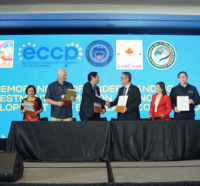
Mindanao partners with foreign chambers to attract international investors
Mindanao Development Authority (MinDA) signs a memorandum of understanding (MoU) with four foreign chambers of commerce. Read more.
Summary: MinDa aims to strengthen international investment by partnering with four foreign chambers of commerce representing European, American, Canadian and Japanese business interests. The agreement follows the Mindanao Development Forum 2026, which brought together government, private-sector and international business representatives to identify opportunities for regional development.
Under the MoU, a MinDA–Mindanao Foreign Chambers Coordination Mechanism will facilitate investor referrals, business matching, trade linkages and engagement between businesses and government agencies. The chambers will promote Mindanao's investment opportunities through their international networks, while MinDA will coordinate with local project proponents and government partners to follow up on potential leads. Cooperation will focus on agribusiness, infrastructure, renewable energy, manufacturing, tourism, logistics and economic zones, with the aim of connecting local enterprises and MSMEs to international markets, investors and technical expertise.

Woodside exits Greater Sunrise, leaving Timor-Leste to fund the field itself
Woodside exits Greater Sunrise, leaving Timor-Leste to fund the field itself. Read more.
Summary: Woodside Energy will sell its 33.44% stake in the Sunrise Joint Venture to the state oil and gas company Timor GAP for up to USD200 million, most of it conditional on reaching production. With Osaka Gas's agreement in September 2026 to sell its 10% share, Timor GAP will own Greater Sunrise outright once both transactions complete. Sales by Shell and ConocoPhillips in 2018 and 2019 imply about USD378 million to USD391 million for the same stake.
Timor GAP's president and chief executive Rui Soares said the exit puts Timor-Leste in a stronger position to expedite development. Dili's South Coast plan requires a pipeline and a liquefied natural gas (LNG) plant, with first LNG flagged for 2032 to 2035 under a cooperation agreement signed with Woodside in November 2025. The International Monetary Fund (IMF) has warned that current policies of Timor-Leste's Petroleum Fund could be depleted in the late 2030s.
Who finances Greater Sunrise is now an ASEAN question as well as a bilateral one, with President Jose Ramos-Horta having said Dili would consider Chinese investment, including talks with Sinopec.
STRATEGIC INSIGHTS
Governance quality, not cheap power, predicts where data centres are built
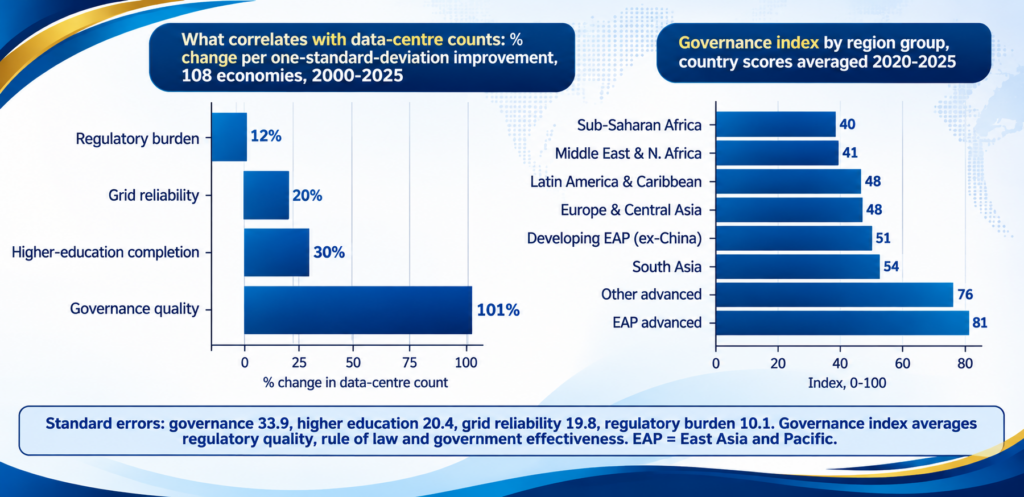
The World Bank's October 2026 regional update finds that country-level energy prices are broadly uncorrelated with where data centres are built. Across 12,490 data centres in 108 economies between 2000 and 2025, a one-standard-deviation improvement in governance quality is associated with 101.2% more data centres, with a standard error of 33.9. Completion of higher education adds 29.8% (standard error 20.4). Grid reliability, at 20.4% with a standard error of 19.8, and broadband download speed, an elasticity of 0.16 with a standard error of 0.18, cannot be separated from zero. Electricity production per capita carries an elasticity of 0.39 and water resources 0.30, both clear of zero.
The sales push for Johor, Batam, and Bangkok does not match the broader data for the developing East Asia and Pacific region (excluding China). While the region offers major advantages like reliable power and exceptionally low industrial electricity costs — USD 80.5 per megawatt-hour compared to USD 163.0 in advanced nations — it lags significantly in other key areas. Specifically, the region scores much lower on government oversight (51.2 vs. 81.4) and has fewer college-educated adults (12.8% vs. 29.5%) than its advanced neighbors. Furthermore, its digital setup is minimal; in 2025, it had just 0.07 data centers per 100,000 people, far behind the 0.43 found in advanced regional economies and the 1.48 seen in the United States.
Capacity on the ground has not produced local provider depth either. Only 10.4% of cloud contracts held by firms in developing EAP run through domestically headquartered providers, with 59.1% going to providers headquartered in the United States, on 2024 data.
What the regression rewards is administrative. Malaysia's Green Lane Pathway and One-Stop-Centre cut grid connection timelines for data-centre operations from 36 to 48 months down to 12 months. The World Bank is more cautious about data localisation: it raises data-centre entry only in large economies with faster internet or more abundant electricity, and elsewhere behaves as a non-tariff barrier on digital services imports, with the cost falling on smaller firms in smaller countries. For ASEAN governments setting 2027 investment plans, permitting speed, contract enforcement and graduate supply are the levers with measured effects; tariff discounts are not.
Governance quality outranks grid reliability and broadband speed in explaining data-centre location
THE WEEK AHEAD: STRATEGIC WATCHLIST

Fourth ASEAN Investment Forum (AIF) 2026 (10 November 2026)
Why it matters: The forum will bring together regional policymakers, investment promotion agencies, institutional investors, project developers and industry leaders to explore investment opportunities across Southeast Asia. Held under the Philippines' 2026 ASEAN Chairmanship, it supports the implementation of the ASEAN Regional Investment Promotion Action Plan (RIPAP) 2025–2030, which aims to strengthen ASEAN's position as an integrated investment destination.
Discussions will examine how sovereign wealth funds can mobilise capital for regional infrastructure and industrial transformation, alongside opportunities in biofuels, sustainable aviation fuel, renewable energy and smart-grid manufacturing. A dedicated session on mining, minerals and green metals will examine opportunities across ASEAN's critical-minerals value chain, including processing, value addition and integration into global supply chains. Source: AIF 2026
ASEAN Business and Investment Summit (ABIS 2026) (14 - 15 November 2026)
Why it matters: Organised by the ASEAN Business Advisory Council (ASEAN-BAC) Philippines as part of the Philippines' ASEAN Chairmanship, the summit will focus on strengthening regional competitiveness and resilience, including trade and investment, supply-chain security, energy, food security, semiconductors and industrial transformation. The summit will convene ASEAN and global leaders, policymakers, ministers, business executives, investors and multilateral institutions to discuss the region's economic priorities.
Discussions will also explore how digitalisation and artificial intelligence can drive productivity and inclusive growth, particularly by expanding opportunities for micro, small and medium-sized enterprises (MSMEs), women and young people. The summit aims to translate dialogue into practical business recommendations, partnerships and investment commitments. Source: ABIS 2026
APEC Economic Leaders’ Week 2026 (14 - 19 November 2026)
Why it matters: China hosts the Asia-Pacific Economic Cooperation (APEC) Economic Leaders' week under the theme "Building an Asia-Pacific Community to Prosper Together", with openness, innovation and cooperation as its stated priorities. The APEC Secretariat said on 3 November 2026 that artificial intelligence is expected to feature prominently, following a year of work on productivity and on reconciling members' approaches to AI governance, data privacy, trust and technical standards. Leaders' Week opens on 14 November 2026 with the Concluding Senior Officials' Meeting. Seven ASEAN member states are APEC members. SEAFIC expects the leaders' declaration to show whether AI governance language can be agreed across 21 economies or is deferred to 2027. Source: APEC Secretariat
