
THE PAST WEEK
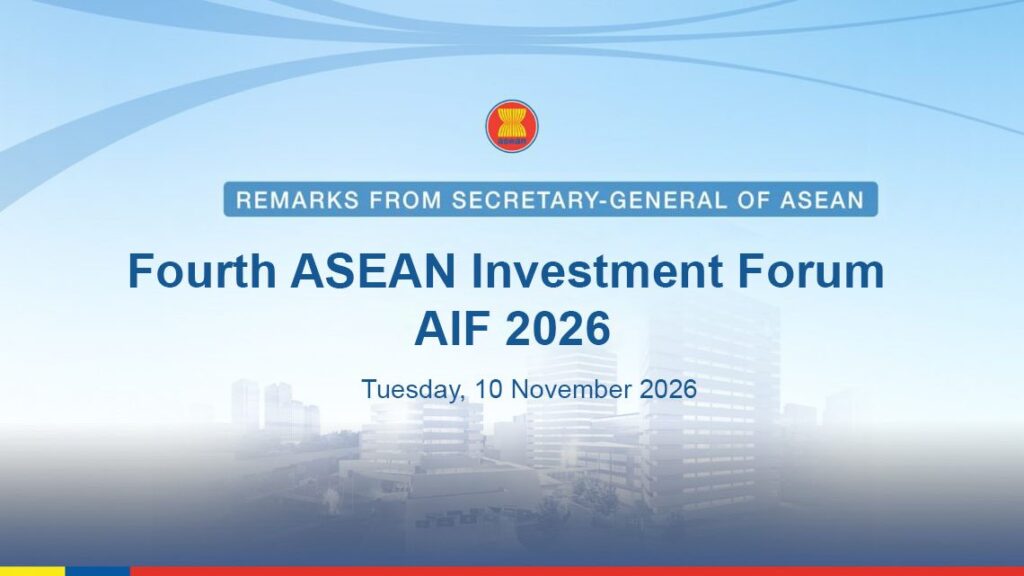
ASEAN Secretary-General Calls for Greater Regional Cooperation
ASEAN Forum Highlights Shift Toward Green Energy and Climate-Resilient Infrastructure. Read more.
Summary: At the ASEAN Investment Forum (AIF) 2026, held under the theme “Navigating Our Future Together,” ASEAN Secretary-General Dr. Kao Kim Hourn delivered pre-recorded opening remarks emphasizing the region's robust investment performance. . He urged member nations to capitalize on strong investor confidence by channeling it into initiatives that spark innovation and drive sustainable industrial transformation.
A key focus of his address was the strategic advancement of the ASEAN Regional Investment Promotion Action Plan (RIPAP) 2025–2030. Dr. Kao stressed that regional growth must be inclusive, highlighting a critical need for investment-ready projects in high-priority green sectors. Specifically, he called for targeted development in renewable energy, sustainable fuels, critical minerals, and climate-resilient infrastructure to secure the region's long-term economic and environmental future.
ASEAN's power grid needs subsea cables the region cannot make
Cable factory slots are booked to 2030, and the ASEAN Power Grid's undersea links are queuing behind offshore wind. Read more.
Summary: 7 of the 18 priority interconnections in the ASEAN Interconnection Masterplan Study (AIMS) III run under the sea, yet the region has one operating cross-border subsea power link: a 4km cable between Plentong in Malaysia and Woodlands in Singapore. No plant in Southeast Asia can make long-distance high-voltage direct current (HVDC) cable at scale. NKT, Prysmian and Nexans, which hold 60% of global capacity, have production slots booked until 2030, and a January 2025 study by USAID and the ASEAN Centre for Energy put lead times at 10 to 12 years.
The submarine power-cable market was valued at USD17.8 billion in 2025 and is projected to reach USD35.9 billion by 2033. ASEAN energy ministers agreed on 7 October to expedite a Subsea Power Cable Development Framework. One proposal is to use the first projects to build local manufacturing and installation skills, with incentives for foreign contractors that partner with local firms. For Malaysia, which lies on most proposed routes into Singapore's 6 gigawatt (GW) import target for 2035, cable supply may set the timetable more than any intergovernmental agreement.
Malaysia proposes new global standard for economic digital connectivity
A new infrastructure proposal aims to go beyond existing Coverage of Populated Areas (CoPA), eliminating digital blind spots across critical supply chains. Read more.
Summary: At the International Telecommunication Union (ITU) Plenipotentiary Conference 2026 in Doha, Qatar, Malaysia’s Communications Minister, Datuk Seri Fahmi Fadzil, advocated for a broader approach to global digital connectivity. He urged international telecom bodies to expand network metric assessments beyond traditional residential parameters, introducing Malaysia's Coverage of Economic Areas (CoEA) concept to complement the existing Coverage of Populated Areas (CoPA) standard.
The framework prioritizes stable network deployment along critical economic hubs and transport networks, such as shipping ports, major highways, and railway corridors. These are locations where reliable connectivity is imperative for business resilience and global supply chain stability. While noting that expanding physical infrastructure is only the initial step toward meaningful digital transformation, Fahmi highlighted Malaysia’s substantial domestic progress through the National Digital Network Plan (Jendela), which achieved a 99.75% internet coverage rate across populated regions as of September 2026. He emphasized that true connectivity must center on digital inclusivity, empowering local communities with necessary technology skills and entrepreneurship opportunities via national dissemination networks.
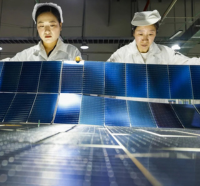
Indonesia’s USD 73 billion solar expansion faces investment challenges
Jakarta needs Chinese hardware to hit its 100GW clean energy target by 2029, but securing the cash to pay for it remains the biggest hurdle. Read more.
Summary: Indonesia is turning to China to help achieve its ambitious target of building 100 gigawatts of solar capacity by 2029, a massive energy transition estimated to cost USD 73 billion. Launched by President Prabowo Subianto in August, the program aims to slash annual carbon emissions by 140 million tonnes and create 5.52 million jobs, starting with 14 initial plants totaling 5.3GW. However, a new report from the Jakarta-based Centre of Economic and Law Studies (Celios) warns that major hurdles threaten the rollout. Because Indonesia produces only 1.6GW to 3GW of solar panels annually, it remains heavily reliant on Chinese hardware and storage technology, creating tension with Prabowo’s push for greater domestic manufacturing control. More critically, Celios executive director Bhima Yudhistira Adhinegara notes that while Chinese partners are expanding beyond nickel and EV batteries, their capital will cover only a fraction of the massive bill. To keep the 2029 target within reach, Jakarta must establish transparent procurement rules and mobilize multilateral financing, potentially from the Brics-backed New Development Bank.
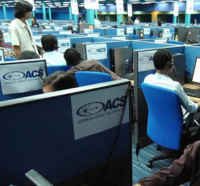
Philippine outsourcing keeps hiring, but entry-level jobs face AI pressure
The sector employs 1.9 million people, and its growth target has already been cut. Read more.
Summary: The Philippines' IT and business process management (IT-BPM) industry employed about 1.9 million people and earned USD40 billion in 2025, according to the IT and Business Process Association of the Philippines (IBPAP). Employment grew 3.7% year-on-year. The best-case target is now 2.14 million workers by 2028, down from 2.5 million, which would have needed growth of about 9.6% a year. June 2026 reviews by Yale's Budget Lab and the International Labour Organization (ILO) found limited AI-driven displacement so far.
An August 2026 Stanford study of US payroll data found weaker hiring of workers aged 22 to 25 in AI-exposed occupations, the age group Philippine call centres recruit from. Washington adds a second risk: the Keep Call Centers in America bill and Federal Communications Commission onshoring proposals could lead clients to delay expansion. One recommendation is for government agencies and IBPAP to fund training only where it leads to measurable placement, retention and earnings. For other ASEAN services exporters, Philippine hiring data will give the earliest reading of AI's effect on jobs.

US firms split over new tariffs on Viet Nam as IP probe nears its end
A Section 301 decision due by 29 November could add to the 12.5% tariff that exporters in Viet Nam already pay. Read more.
Summary: The Office of the US Trade Representative (USTR) is due to conclude an investigation by 29 November 2026 into Vietnam's protection of intellectual property, which was opened in May under Section 301 of the Trade Act and may result in new tariffs. Tech giants Tesla and the US unit of Samsung, the largest single foreign investor in Viet Nam, have argued against new duties, citing components and equipment that cannot be sourced in the US. Conversely, domestic producers of steel, seafood, plywood, solar panels and wood products are actively lobbying in favour of the tariffs.
Imports from Viet Nam already carry a flat 12.5% tariff imposed in July after a separate Section 301 investigation into forced labour, and Viet Nam is one of 16 partners under a further probe into excess manufacturing capacity. The probes followed the US Supreme Court's February ruling against the 2025 reciprocal tariffs, under which Viet Nam's rate had been cut from 46% to 20%. A final bilateral deal is still pending. The outcome will show how far Washington now uses Section 301 to replace the annulled tariffs across ASEAN.
STRATEGIC INSIGHTS
Southeast Asia buys most of its crude from the Middle East and holds little in reserve
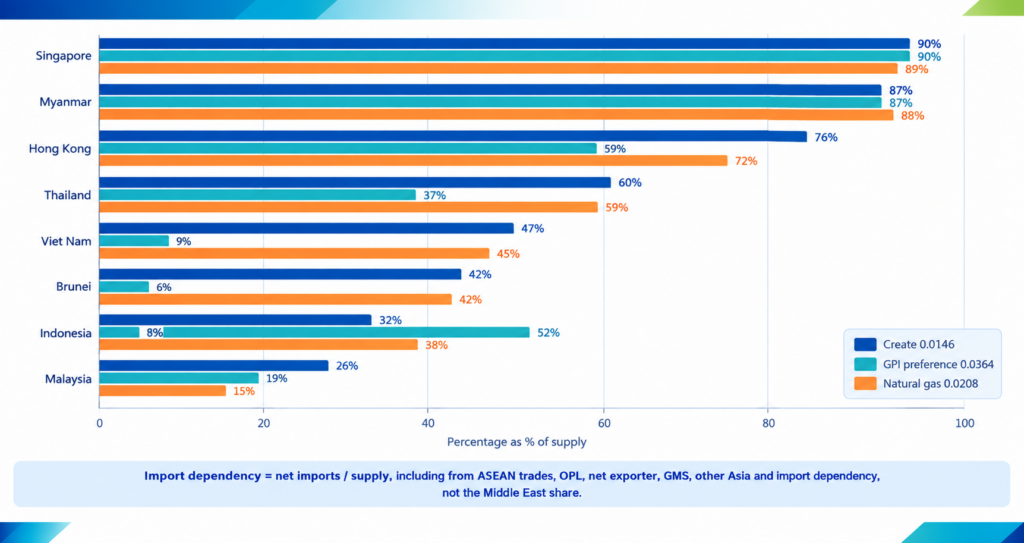
Before shipping through the Strait of Hormuz was disrupted on 28 February 2026, about 60% of Southeast Asia's crude imports and a third of its gas imports came from the Middle East, according to the International Energy Agency's (IEA) Southeast Asia Energy Outlook 2026. About 45% of the region's refined products are made from Middle East crude. The IEA's ASEAN Energy Security Review of 6 October shows how unevenly the exposure falls. Singapore and Myanmar import all their crude, the Philippines 97% and Thailand 87%. Malaysia imports a quarter and Indonesia about a third.
The disruption has already cut supply. LNG deliveries to ASEAN through Hormuz fell by about 75% in January to August 2026, and the IEA now expects ASEAN oil demand to fall 2.1%, or 150,000 barrels a day, in 2026E, against growth of 160,000 barrels a day expected before the war. Brent spot averaged USD124 a barrel in October, the highest since July 2022, according to the US Energy Information Administration (EIA), before falling below USD100 on 4 November. The IEA puts the region's energy import bill at USD160 billion in 2026E.
Malaysia's low headline figure understates its exposure. Its refineries run on imported sour crude, and the Middle East supplied 69% of those imports in 2025, according to RAM Ratings. Liquefied petroleum gas (LPG) is a second weak point for the whole region: ASEAN imports about 500,000 barrels a day, and the Middle East supplies nearly half of 2026 volumes.
The IEA expects the oil market to swing from deficit in the fourth quarter of 2026 to surplus by the first quarter of 2027, which would make reserves cheaper to fill. Few governments are ready to buy. Indonesia has a reserve framework it has not implemented, the Philippines is still planning one, and Singapore holds no strategic petroleum reserve, according to the IEA. Governments that start procurement now, with separate LPG stocks as the IEA suggests, can buy at surplus prices. ASEAN members could also give the ASEAN Petroleum Security Agreement (APSA) working rules for sharing supply in an emergency, which it has lacked through eight months of disruption.
Most ASEAN economies import nearly all their crude; Malaysia and Indonesia are the exceptions
THE WEEK AHEAD: STRATEGIC WATCHLIST

The 49th ASEAN Summit and Related Summits (14 - 17 November 2026)
Why it matters: The summit will be held in Manila, the Philippines, under the theme “Navigating Our Future, Together.” It will convene ASEAN leaders, dialogue partners and senior officials to review regional progress and shape future cooperation. Beyond reviewing progress under the Philippines’ 2026 chairmanship, the summit is an opportunity to secure regional commitments and advance initiatives with practical implications for trade, investment, digital integration and energy connectivity. It is also aimed to chart future directions and reaffirm ASEAN’s commitment to maintaining peace, stability and security in the region. Source: ASEAN
The 47th ASEAN Inter-Parliamentary Assembly (AIPA) General Assembly (16 - 22 November 2026)
Why it matters: The ASEAN Inter-Parliamentary Assembly (AIPA) holds its 47th General Assembly in Metro Manila, closing the Philippine presidency year, with an ASEAN Hearing convened on 18 November 2026 alongside it. The event will be held under the theme “Parliaments Securing a Peaceful, Prosperous, and People-centred ASEAN”, bringing together all 10 AIPA member parliamentary delegates to discuss regional challenges, such as rising food and energy prices, illegal recruitment, human trafficking, cybercrime and online child safety. The assembly will also provide a platform for lawmakers to exchange legislative experiences and explore measures to strengthen regional cooperation. Source: Philippine House of Representatives
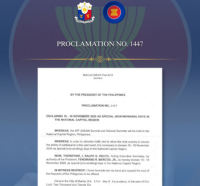
16th ASEAN Maritime Forum and 14th Expanded ASEAN Maritime Forum (16 - 18 November 2026)
Why it matters: Both forums convene senior officials in Metro Manila following the ASEAN leaders' meetings, providing platforms for regional maritime dialogue and cooperation. The 48th ASEAN Summit in Cebu on 8 May 2026 adopted the ASEAN Leaders' Declaration on Maritime Cooperation, which reaffirmed the forums as Track 1.5 platforms and called for efforts to conclude the South China Sea Code of Conduct in accordance with the United Nations Convention on the Law of the Sea (UNCLOS). The declaration also noted plans to establish an ASEAN Maritime Centre in the Philippines and supported the ASEAN Coast Guard Forum's recognition as a sectoral body. Cambodia's ratification of UNCLOS on 6 February 2026 means all ASEAN member states are now parties to the convention. Source: Presidential Communicati4on Office Bulletin (Philippines)
