
THE PAST WEEK

Taiwan urges Malaysia to update the Malaysia-Taiwan Bilateral Investment Agreement (BIA)
The Taipei Economic and Cultural Office in Malaysia has urged the Malaysian government to begin negotiations over updating the Malaysia-Taiwan Bilateral Investment Agreement (BIA), signed in 1993, to reflect today’s evolving international investment landscape. Read more.
Summary: According to the Taipei Economic and Cultural Office, the BIA, which has been in place for 30 years, contains only 10 provisions and has not been updated to reflect current investment needs. For instance, the current BIA does not contain any protections for intellectual property rights and technology transfer.
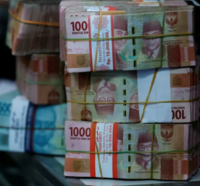
Indonesian rupiah falls to record low against US Dollar
The Indonesian rupiah fell to a record low of 17,525 against the US dollar on 12 May in response to the ongoing stalemate in US-Iran peace talks. Read more.
Summary: Since the outbreak of the Iran War in late February, Indonesia’s rupiah has fallen nearly 7 percent. The Indonesian rupiah is under pressure due to the risks of fuel shortages caused by global energy disruptions. Indonesia's vulnerability is heightened by relatively low crude inventory buffers, largely due to storage capacity constraints.
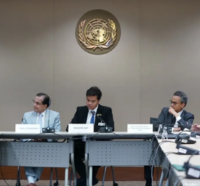
Thailand-Bangladesh FTA could lift economic activity by more than 40 percent
It is believed that a future free trade agreement between Bangladesh and Thailand could lift economic activity between both countries by more than 40 percent. Read more.
Summary: The potential benefits of a future FTA between Thailand and Bangladesh was discussed at a conference titled “Enhancing Bangladesh–Thailand Economic Engagement: Challenges, Opportunities, and the Way Forward in the Future Free Trade Agreement” held at the United Nations Conference Centre, organized by the International Institute for Trade and Development (Public Organization), the United Nations Economic and Social Commission for Asia and the Pacific, and the Embassy of Bangladesh in Thailand. Bilateral trade between both countries stood at around USD 1 billion in 2025.
Vietnam and Canada seek to advance trade and investment ties
On 11 May, Vietnam’s Minister of Industry and Trade Le Manh Hung and Canadian Ambassador to Vietnam Jim Nickel discussed measures to deepen bilateral trade and investment ties, as well as the progress of negotiations on the ASEAN-Canada Free Trade Agreement. Read more.
Summary: The bilateral trade turnover between Canada and Vietnam has doubled over the past four years. In 2025 alone, bilateral trade reached USD 8.6 billion, up 18.8 percent on-year, of which Vietnam’s exports to Canada amounted to USD 7.5 billion, up 18.2 percent, while imports from Canada totalled USD 1.1 billion, an increase of 23.7 percent. With regards to the ASEAN-Canada Free Trade Agreement (ACAFTA), all parties are hoping to conclude negotiations in 2026.
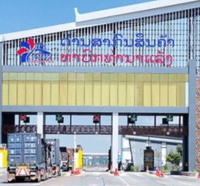
Lao PDR government stepping up investment reforms
The Laotian government is stepping up investment reforms to speed up project approvals, improve transparency and strengthen the oversight of development projects across the country. Read more.
Summary: The Laotian government has stressed the need to streamline investment approvals and related reviews by ministries and provincial authorities to ensure greater transparency and efficiency, as well as the need for stronger monitoring and inspection of approved development projects, with provincial authorities expected to play a greater role in following up on the way investment is utilised.
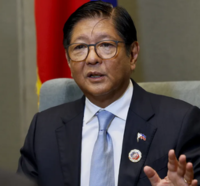
The Philippines’ economy expands at slowest pace since the pandemic in last quarter
In the last quarter, the Philippines’ economy expanded 2.8%, below estimates and representing the slowest pace since the COVID-19 pandemic. Read more.
Summary: The Philippines is acutely vulnerable to the conflict in the Middle East since it imports more than 90 percent of its energy from the region. Since the outbreak of the war in Iran, the Philippines’ peso has emerged as the worse performer in Asia, while its stock market is the second-worst in the world. According to economists, the Philippines is the most at risk in the region of stagflation — characterized by weak growth, high inflation and unemployment
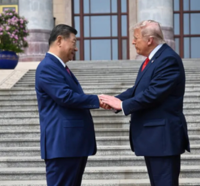
Trump holds meeting with Xi Jinping in Beijing
Between 13-15 May, US President Donald Trump will not meengtis with Chinese President Xi Jinping amidst trade tensions and the ongoing stalemate in the war in Iran. Read more.
Summary: Since Trump returned to office in early 2025, trade between the two largest economies in the world have been disrupted as Trump unleashed a series of tariffs on China. Beijing retaliated with its own tariffs and halted the exports of rare earth metals. The health of bilateral trade between the US and China has significant ramifications on the economies of Southeast Asia, given how intermixed Southeast Asia is with China-centric supply chains. While US imports from China collapsed, businesses adapted by moving their supply chains to alternative markets such as Vietnam and Malaysia.
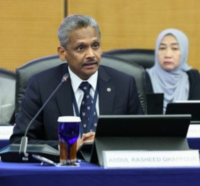
Malaysia’s economy expands 5.4% year-on-year in first quarter of 2026
Malaysia’s GDP growth overshot expectations in the first quarter of 2026, rising 5.4% year-on-year (beating an advance estimate of 5.3% released last month). Bank Negara Malaysia expects the economy to expand 4% to 5% in 2026, buoyed by steady domestic demand and a continued expansion in exports. Read more.
Summary: Bank Negara Malaysia held the key rate steady at 2.75% last week, and added on 15 May that the current benchmark interest rate remains appropriate. While the Middle East conflict is expected to add upward pressure on prices and weigh on Malaysia’s growth outlook, the country should also be cushioned by its status as a net energy exporter and its multiple growth drivers.
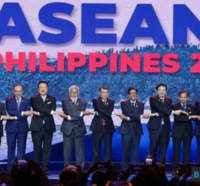
48th ASEAN Summit
Following the 48th ASEAN Summit held in Cebu, the Philippines, ASEAN leaders acknowledged that the impact of the Iran war will not be reversed overnight should hostilities end immediately, and that member states should prepare for the economic and geopolitical challenges arising from the conflict.
Among other things, ASEAN leaders have urged member states to expedite the ratification of the ASEAN Petroleum Security Agreement (APSA) 2.0, as well as to accelerate the operationalisation of the ASEAN Power Grid. ASEAN also agreed to set up an ASEAN Maritime Center in the Philippines.
- The ASEAN Petroleum Security Agreement is a regional framework designed to strengthen ASEAN energy security cooperation, including emergency fuel-sharing arrangements during supply disruptions and crises.
- The ASEAN Power Grid is a regional initiative designed to connect electricity networks across Southeast Asia to strengthen energy security, support cross-border electricity trade and improve regional grid resilience.
- The ASEAN Maritime Centre is aimed at backing ASEAN’s work on maritime issues, with a focus on maintaining freedom of navigation in the South China Sea, as well as on tackling other issues such as illegal fishing and smuggling.
STRATEGIC INSIGHT
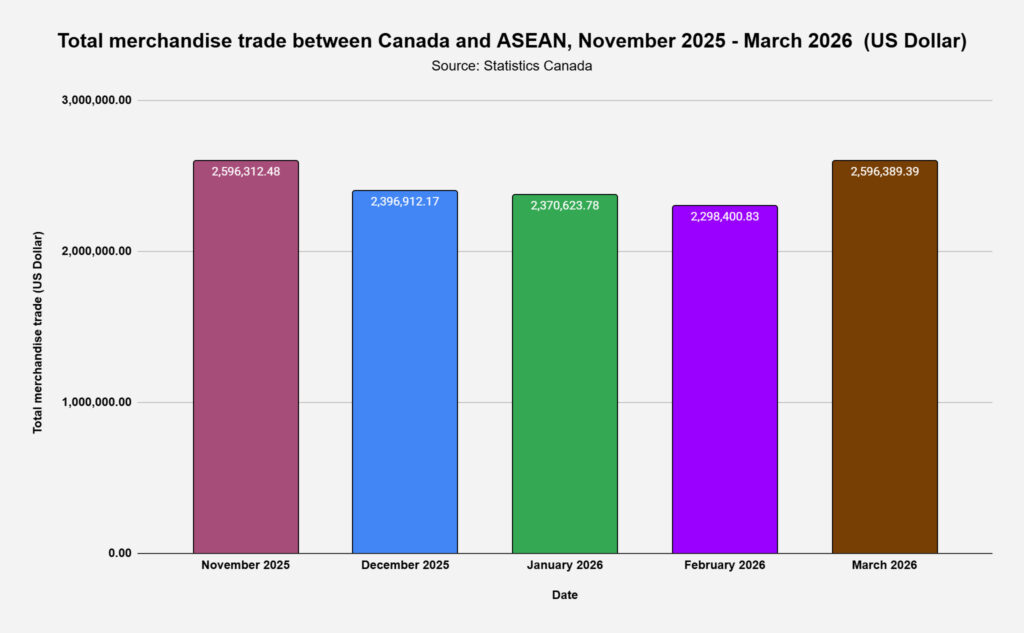
According to Canadian officials, Canada expects to conclude negotiations over a free trade agreement with ASEAN this year, with negotiations having begun in 2021. The ASEAN-Canada Free Trade Agreement is expected to open doors across strategic sectors such as the digital economy, food and energy security, linking Canada’s tech and resource sectors with Southeast Asian manufacturing. The ASEAN-Canada bilateral trade reached USD 37.5 billion in 2025, a 23 per cent increase from 2024. The agreement is part of Canadian Prime Minister Mark Carney’s commitment to diversifying the nation’s trading partners, with Canada aiming to double Canada’s exports to markets outside the US within a decade to net an extra CAD 300 billion in trade.
THE WEEK AHEAD: STRATEGIC WATCHLIST
Why it matters: This monthly monetary meeting determines the next benchmark interest rate for Indonesia. This comes as the Indonesian rupiah faces immense pressure from the ongoing global energy crisis caused by the Iran war, with the rupiah having fallen by nearly 7 percent against the US Dollar.
Source: Calendar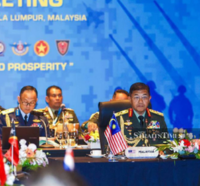
23rd ASEAN Chiefs of Defense Forces Meeting (ACDFM) (17 - 23 May 2026)
Why it matters: The ACDFM is described as the premier and highest-level forum of military leadership within ASEAN. It provides a forum for discussing common security threats affecting the region, as well as for strengthening cooperation among ASEAN’s armed forces.
Source: ASEAN 2026 Events