
THE PAST WEEK
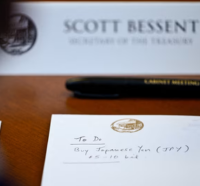
The US has stepped in to buy Japanese yen. Why?
The United States bought the Japanese yen for the first time in more than a decade as “a signal of friendship,” President Donald Trump said Sunday. The rare bilateral intervention in Japan’s currency market was designed to prop up the yen from its 40-year low against the dollar. Read more.
Summary: The US Treasury bought yen on Friday, July 31, in coordination with Japan's Ministry of Finance and the Bank of Japan — Washington's first yen-buying intervention alongside Tokyo in more than a decade, and the first true joint operation since 1998. The yen had been sliding toward 40-year lows, briefly touching close to 164 to the dollar (its weakest since 1986), driven partly by concerns over Japan's fiscal policy and bond yields. President Trump confirmed the US was helping "as a sign of friendship," while Treasury Secretary Scott Bessent said Washington would "not hesitate to participate in further joint intervention," and Japan's Finance Ministry likewise pledged readiness for more coordinated action, tied to a joint statement the two countries' finance ministers issued back in September 2025.
This is a significant, somewhat unusual show of US-Japan financial coordination — the last comparable joint intervention was in 2011, after the earthquake, and that one was aimed at weakening the yen, the opposite direction. Analysts note the currency slide had been squeezing Japanese households through higher import and food prices, hurting PM Takaichi Sanae’s approval ratings, so the move carries real domestic political stakes for Tokyo. It's also being read as revealing something about Washington's broader posture: some economists argue the US has previously seen the weak yen as giving Japan an unfair trade advantage, so stepping in to support it marks a shift, and CFR's analysis suggests the move may be as much about protecting US Treasury bond markets (Japan is a major holder of US debt) as about the yen itself.
More broadly, it signals a Treasury under Bessent that's increasingly willing to use currency intervention as a geoeconomic tool — a pattern also seen in a recent Argentina peso intervention — which matters for how other countries, including ASEAN members watching their own currencies weaken against the dollar amid the same global backdrop (higher energy costs, Fed policy, geopolitical risk), might expect Washington to behave if their currencies come under similar pressure.
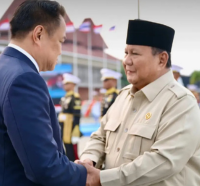
Thai PM made first official Indonesia visit in 15 years
Prime Minister Anutin Charnvirakul wrapped up a landmark visit to Indonesia, meeting Indonesian President Prabowo Subianto with a $23bn trade target, new flight routes, and joint action on online scams. Read more.
Summary: Among the concrete outcomes was a new bilateral trade target of $23 billion by 2030 (up from ~$20 billion currently); 4 MOUs on carbon markets, economic cooperation, a deal for new direct flights linking Bangkok to Jakarta and Phuket to Bali, alongside a formal Thailand–Indonesia Strategic Partnership Action Plan tracking progress on food and energy security, the Halal industry, green economy initiatives, and supply chain integration. Both governments also agreed to deepen real-time intelligence sharing to combat online scam operations, human trafficking, narcotics networks, and money laundering. Anutin closed the trip with an address at the ASEAN Secretariat, reaffirming Thailand's support for the Five-Point Consensus on Myanmar and previewing Thailand's upcoming 2028 ASEAN chairmanship.
This visit matters for several reasons. A 15-year gap between Thai PM visits to Jakarta is a long time for ASEAN's two largest founding members, so the trip signals a real reset in ties at a moment when Anutin's young government — only months into office — is looking to build its foreign-policy credibility. It also fits a broader pattern this year of ASEAN states leaning harder into intra-regional trade and travel links, alongside developments like the ACFTA 3.0 ratifications and Malaysia's investment surge, as a hedge against external shocks such as US tariffs and Middle East-driven energy costs.
The security cooperation piece is arguably just as consequential as the trade figures: Southeast Asia's scam-compound industry has become a serious regional liability and a point of friction with dialogue partners like the US and China, so joint action here addresses a reputational as well as a criminal problem. The visit also lets Thailand start building its 2028 ASEAN chairmanship narrative early, positioning itself — as Myanmar's most exposed neighbor — as a driver of the bloc's most unresolved crisis.
Practically speaking, the new flight routes and firmer trade targets offer near-term, tangible reasons for exporters, tourism operators, and small businesses in both countries to expand cross-border activity, even if the $23 billion 2030 target represents an incremental rather than transformative jump from current trade levels.
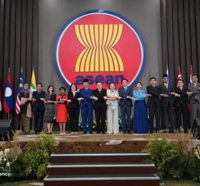
ASEAN turned 59, vowed unity and firm central role
ASEAN needs to continue maintaining unity and upholding its central role, with the ASEAN Community Vision 2045 serving as the strategic compass to navigate a fast-changing world, its Secretary-General Kao Kim Hourn addressed a ceremony in Jakarta, Indonesia, on August 8 marking its 59th anniversary (August 8, 1967–2026). Read more.
Summary: Secretary-General Kao Kim Hourn said the bloc must keep maintaining unity and upholding its central role, with the ASEAN Community Vision 2045 serving as its strategic compass for a fast-changing world.
On the economic front, he highlighted the forthcoming ASEAN Digital Economy Framework Agreement, due to be signed by year's end, describing it as the world's first comprehensive regional digital economy pact, expected to double the size of ASEAN's digital economy.
With the bloc now home to more than 680 million people and a combined GDP of around US$4.5 trillion growing at 4.5 per cent annually, he called for deeper integration and stronger connectivity strategies through 2035.
He credited nearly six decades of dialogue, mutual respect, and a drive to find common ground for carrying ASEAN through past crises while preserving regional peace and stability, and warned that today's cross-border threats — trade disruptions, food and energy insecurity, climate change, and natural disasters — demand closer cooperation than ever.
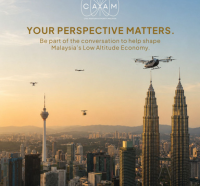
Low Altitude Economy: Malaysia's Next Growth Engine
Malaysia is beginning to look beyond the traditional airspace above us. The Low Altitude Economy (LAE) is emerging as a new frontier for economic activity, with drones, autonomous aircraft, artificial intelligence, Advanced Air Mobility and digital connectivity expected to transform how goods, services and people move. Read more.
Summary: The Civil Aviation Authority of Malaysia (CAAM) is now seeking public and industry feedback on its proposed Malaysia Low Altitude Economy Framework, which aims to provide a long-term direction for building a safe, secure, sustainable and commercially viable LAE ecosystem. The framework is built around four strategic pillars: Safe Aircraft, Safe Operations, Connected Infrastructure and Thriving Industry, supported by a phased implementation roadmap.
The timing is significant. A recent Nikkei Asia report highlights how quickly this market is developing across Southeast Asia. Chinese drone exports to Malaysia more than doubled in the first half of 2026, alongside growing regional demand for drones used in agriculture, infrastructure inspection, surveying and logistics. The question for Malaysia is therefore not whether the low-altitude economy will emerge, but what role Malaysia will play in it.
For Malaysia, this could become more than an aviation policy. A well-developed LAE ecosystem could create opportunities across aerospace, AI, telecommunications, logistics, advanced manufacturing and digital infrastructure, while opening new markets for Malaysian companies and creating high-value jobs. It could also determine whether Malaysia remains primarily a user of imported drone technologies or develops into a regional hub for low-altitude innovation, operations and services.
CAAM is inviting industry players, academia, investors, government agencies and members of the public to help shape the framework. Written feedback is open until 2 September 2026.
Have your say: Access the Public Consultation Paper and feedback information.
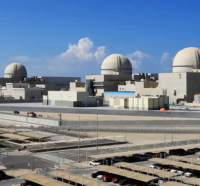
Can Asean decarbonise without nuclear power?
The article examines whether ASEAN can achieve its net-zero ambitions while meeting rapidly growing electricity demand without nuclear energy. With eight ASEAN countries committed to net-zero targets, the region faces the challenge of expanding clean electricity while maintaining reliability, affordability and energy security. Read more.
Summary: The central argument is that ASEAN may need to look beyond a single technology pathway. Renewable energy will remain central to the transition, but intermittency, grid constraints and rising electricity demand could make it difficult for renewables alone to provide the reliable baseload power needed by increasingly industrialised economies. At the same time, ASEAN needs to reduce its reliance on fossil fuels while meeting the demand from electrification, AI and the expansion of data centres. At ETCon26, this was discussed as a question not only of climate policy, but also of energy security, economic growth and future competitiveness.
For Malaysia in particular, geographical constraints make complete reliance on renewable sources more challenging, especially in Peninsular Malaysia. MyPOWER CEO Asdirhyme Abd Rasib argued that nuclear could provide firm power alongside renewables and potentially replace coal in supporting grid stability.
Nuclear power is therefore presented as a potential part of ASEAN's broader energy mix, particularly as countries consider how to balance decarbonisation with energy security. The discussion is ultimately less about choosing between nuclear and renewables, and more about whether ASEAN should pursue a diversified, technology-neutral energy strategy that allows different countries to adopt solutions suited to their circumstances.
STRATEGIC INSIGHTS
New data highlights a quiet but significant shift in Southeast Asia's economic hierarchy. Based on IMF 2025 estimates (in current US dollars), here's where ASEAN stands:
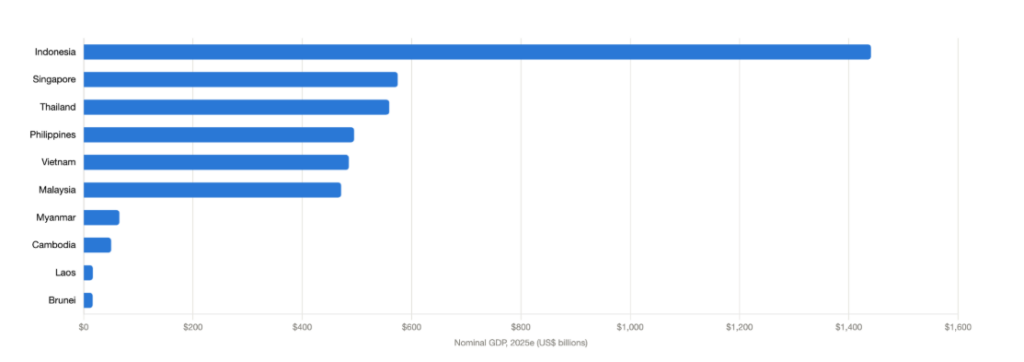
Top 6 ("ASEAN-6") dominate the bloc, together accounting for over 95% of total regional GDP:
- Indonesia leads by a wide margin at ~$1.44 trillion — roughly 2.5x the size of the next-largest economy
- Singapore ($574B), Thailand ($559B), Philippines ($494B), Vietnam ($485B), and Malaysia ($471B) form a tight cluster, all within about $100B of each other
- Interestingly, Singapore overtakes Thailand as ASEAN's No. 2 economy on nominal GDP in current US dollars.
Smaller economies like Myanmar, Cambodia, Laos, and Brunei in which each sit well under $70B, reflecting much smaller populations and, in Myanmar's case, ongoing political instability weighing on output. Timor-Leste formally joined ASEAN in October 2025 but isn't included here since it wasn't yet a member for most of the reference period, and its GDP (~$2B) is negligible on this scale.
Source: https://seasiastats.com/infographic/singapore-overtakes-thailand-as-aseans-no-2-economy-wmtOf
THE WEEK AHEAD: STRATEGIC WATCHLIST
4th ASEAN Blue Economy Forum (22-23 August 2026)
Why it matters: The ASEAN Blue Economy is an integrated, cross-sectoral approach that uses ocean, sea, and freshwater resources sustainably to drive future economic growth across Southeast Asia.
The forum comes as ASEAN moves from defining its Blue Economy Framework to implementing the 2026–2030 regional plan, which aims to develop blue assets, investment, trade, infrastructure, technology, and regional value chains. At the same time, ASEAN's maritime economic ambitions sit alongside unresolved territorial and maritime disputes, particularly in the South China Sea. ASEAN and China are still negotiating a Code of Conduct, with ASEAN members continuing to emphasise UNCLOS as the legal framework for managing maritime activities and disputes. This creates a particularly important tension: how can ASEAN maximise the economic benefits of its maritime resources while ensuring that greater economic activity does not intensify existing disputes?
Source: ASEAN Blue Economy Forum

PRAXIS 2026: Reimagining Visions of Progress (18 August 2026)
Why it matters: PRAXIS 2026 comes as Malaysia approaches high-income status while facing a fundamentally different external environment, marked by geopolitical fragmentation, changing trade patterns and the emergence of new economic alignments. One of the key panels, “Future of Malaysia’s place in a new world,” brings together perspectives from Indonesia, the Asian Development Bank, the German Institute for International and Security Affairs and the Jeffrey Cheah Institute on Southeast Asia to examine how Malaysia’s trade and industrial strategies, partnerships with the Global South, and role in the world economy should evolve.
The discussion is particularly timely as Southeast Asian economies are balancing openness to trade and investment with greater economic resilience and strategic autonomy. Malaysia's position is especially relevant given its role in ASEAN supply chains and its growing economic ties with both traditional partners and emerging markets. The panel could offer insight into whether ASEAN economies should respond to global fragmentation through greater diversification, deeper regional integration, or stronger engagement with the Global South.
Source: PRAXIS 2026
ASEAN–EAEU Dialogue and Capacity-Building on Digital Cooperation and Development (19 - 21 August 2026)
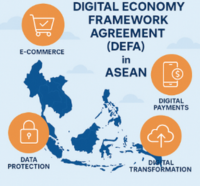
Why it matters: The dialogue comes as ASEAN moves towards implementing the Digital Economy Framework Agreement (DEFA), concluded in May 2026 and to be signed in November, which covers digital trade, cross-border data flows, digital payments and electronic transactions. The event’s focus on digital trade, trade facilitation, customs modernisation and digital connectivity is therefore timely as ASEAN seeks to make digitalisation a driver of deeper regional trade and integration.
The discussion also comes as ASEAN seeks to diversify its external economic partnerships amid growing fragmentation in global trade. The EAEU is becoming a more concrete economic partner: Indonesia and the EAEU signed a Free Trade Agreement in December 2025, creating a potential pathway for greater trade between Southeast Asia and the Eurasian bloc.
Source:ASEAN-EAEU Dialogue
