
SEAFIC RESEARCH SPOTLIGHT
SEAFIC Research Report
The report marks SEAFIC’s first research output under its ASEAN Monitor series and will inform future work on critical inputs, supply-chain concentration, and regional coordination mechanisms. The full paper contains detailed methodology, country-level findings, and sectoral analysis, and is available upon request via www.seafic.org.
Executive Summary
The disruption in the Strait of Hormuz should be understood not only as a temporary energy-price shock, but also as a supply-chain shock whose effects depend on how Gulf-origin inputs enter and propagate through domestic production networks. For ASEAN, the relevant policy question is therefore not only the size of the initial oil and LNG price increase, but also where exposure is concentrated and how it is transmitted across sectors.
- This paper addresses that question using a three-lens framework: direct exposure at the border, exposure through domestic production linkages, and exposure through global production linkages. The framework is applied first to Malaysia as a detailed case study and then extended to nine ASEAN economies using a consistent regional input-output dataset.
- Across the nine ASEAN economies covered, Gulf-origin exposure totals up to USD51 billion. Thailand tops the list as most exposed at USD26.1 billion, with Malaysia coming in second at USD8 billion in exposure by volume.
The Malaysian case study points to two central findings. First, exposure is concentrated in a narrow set of upstream sectors with large forward linkages, like petroleum refining and related energy-linked activities. Second, some downstream sectors become more vulnerable once inherited exposure is traced through domestic production chains. This is most evident in the livestock chain, where fertiliser- and feed-related linkages materially widen effective exposure.
THE PAST WEEK
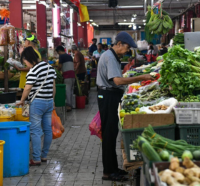
Rising input costs to raise inflation to nearly two-year high
Economists have warned that Malaysian consumers may see the fastest inflation in nearly two years as early as May as producers start to feel the pinch from higher energy and logistics costs. Read more.
Summary: Up till now, firms have been absorbing higher costs or drawing down inventory bought before the outbreak of the Iran war, but economists warn that margin pressures are building up as the blockade of the Strait of Hormuz enters its third month without any sign of abating. It has been suggested that inflation could spike to 3% and beyond the 1.5-2.5% projected by Bank Negara Malaysia. Historical trends suggest that price pass-through typically occurs within two to four months after initial shocks, pointing to a potential acceleration in consumer inflation between May and July.
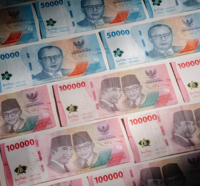
Indonesia further tightens rules on dollar purchases to support rupiah
Bank Indonesia has further tightened rules on dollar purchases to support the rupiah, with cash purchases of foreign currency without supporting documents to be cut to USD25,000 from USD50,000 Read more.
Summary: Bank Indonesia had previously tightened foreign-exchange regulations in April by requiring supporting documents for purchases of USD 50,000 per buyer per month, down from USD100,000. This comes as the rupiah has continued to hit new lows against the US Dollar, having fallen about 4% against the dollar this year.
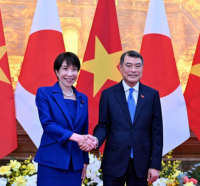
Japan and Vietnam target investments of USD5 billion per year
Japan and Vietnam have targeted Japanese investments into Vietnam reaching USD5 billion per year at an early date, as well as bilateral trade of USD60 billion by 2030. Read more.
Summary: Between 1-3 May, Japanese Prime Minister Takaichi Sanae made an official visit to Vietnam, during which she and her counterpart, Vietnamese Prime Minister Le Minh Hung, witnessed the signing of six bilateral cooperation agreements concerning areas such as climate resilience, low-carbon growth, digital transformation and space data.
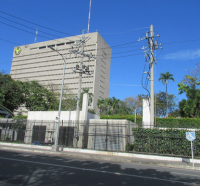
Consumer prices rise 7.2% year-on-year in April, fastest pace in three years
According to the Philippine Statistics Authority, consumer prices rose 7.2% year-on-year in April, exceeding the central bank’s forecast of 5.6%-6.4%. Prices had only gained 4.1% in March. Read more.
Summary: The latest data underlines how quickly price pressures have spread in the Philippines, with the country importing nearly all of its oil from the Middle East. There is now greater pressure on the Bangko Sentral ng Pilipinas (BSP) to aggressively hike rates. The BSP had just raised the key rate by a quarter-point to 4.5% in April and will meet again next month.
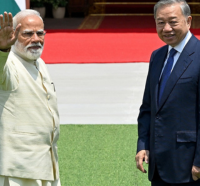
Vietnam and India looking to boost bilateral trade to USD25 billion by 2030
During an official visit to India, Vietnamese President To Lam and Indian Prime Minister Narendra Modi agreed to boost bilateral trade to USD25 billion by 2030. Read more.
Summary: Bilateral trade between India and Vietnam has doubled over the last decade to reach USD16 billion. During To Lam’s visit to India, both sides discussed cooperation in areas such as education, rare earth minerals, and digital payment systems.

Thailand approves THB 958 billion of investment projects
Thailand approved THB958 billion (USD29 billion) of investment projects, led by TikTok System (Thailand) Co’s planned expansion of data infrastructure. Read more.
Summary: TikTok’s THB842 billion project will add servers and expand data storage and processing facilities across Bangkok and the neighbouring provinces of Samut Prakan and Chachoengsao. Other approved projects included a THB46 billion data centre backed by United Arab Emirates-based DAMAC Group and a THB24.6 billion facility by Singapore-based Bridge Data Centres. This comes as Thailand seeks to position itself as a regional hub for artificial intelligence (AI) and cloud services.
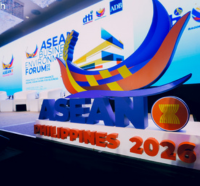
48th ASEAN Summit
The Member States of the Association of Southeast Asian Nations (ASEAN), gathered in Cebu, Philippines, on 8 May 2026, for the 48th ASEAN Summit under the Chairship of the Republic of the Philippines. The Summit was chaired by H.E. Ferdinand R. Marcos Jr., President of the Republic of the Philippines, and convened in accordance with the ASEAN Charter. Read More...
Summary: At the recent ASEAN summit, member states reaffirmed ASEAN’s principle of “Centrality,” reinforcing the bloc’s role in maintaining regional stability and strategic autonomy amid growing global power rivalries. With ASEAN projected to become the world’s fourth-largest economy by 2030, leaders also advanced efforts to strengthen regional economic integration, accelerate digital transformation for SMEs through AI adoption, and promote green energy initiatives to support carbon neutrality goals. The summit further demonstrated ASEAN’s united diplomatic approach through the establishment of a new maritime cooperation centre and joint statements on key global issues, including the conflict in Ukraine.
STRATEGIC INSIGHT
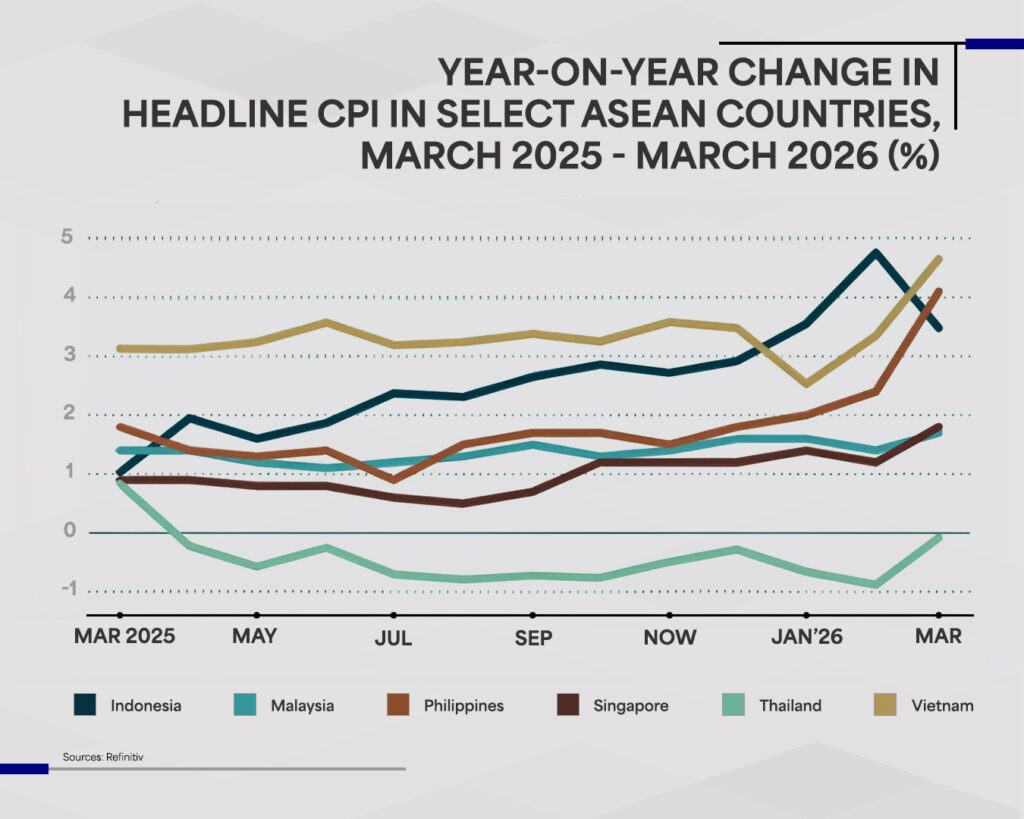
Consumer inflation is accelerating across Southeast Asia due to disruptions to oil supplies and other industrial inputs caused by the Iran War. Southeast Asia's exposure is concentrated in crude oil and refined petroleum products, which had fed into higher costs for manufacturing, transport and trade financing. Among the most affected countries are the Philippines and Vietnam, both of whom have seen the sharpest increase in transport costs.
THE WEEK AHEAD: STRATEGIC WATCHLIST
38th ASEAN-Australia Forum
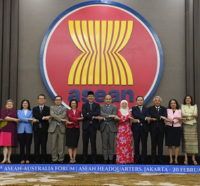
Why it matters: The ASEAN-Australia Forum typically provides senior officials from both ASEAN and Australia with a forum to discuss ways of strengthening regional cooperation, exchange views on regional and international issues, and to review the progress made under the ASEAN-Australia Comprehensive Strategic Partnership.
Source: ASEAN 2026 Event
33rd ASEAN-New Zealand Dialogue (ANZD)
Why it matters: New Zealand is ASEAN's second-oldest dialogue partner (since 1975) and formally established a Comprehensive Strategic Partnership (CSP) with ASEAN in October 2025.
Source: ASEAN 2026 Event