
FEATURED COMMENTARY

by Tengku Zafrul Aziz
Chairman of SEAFIC
One Hundred Days On: Why Energy Resilience Must Now be an ASEAN Joint Initiative
One hundred days into the global energy crisis, one truth is unavoidable: this is no longer a disruption to wait out. The escalating conflict in West Asia and the effective closure of the Strait of Hormuz have produced what the IEA calls the largest supply shock in the history of the global oil market. For ASEAN — a region that imports much of its energy and exports much of the world’s manufactured goods — the shock is not passing. It is settling in. Our task must shift from emergency response to long-term resilience.
Malaysia entered this storm with relative buffers: a mature oil and gas ecosystem, domestic refining, and institutions like Petronas. Many of our neighbours had less room to manoeuvre. But strengths that bought time did not solve the deeper challenge. With Brent averaging USD95–100 a barrel, pressure on prices, supply chains and household budgets persists across the region.
This is a crisis that arrives in waves — and ASEAN sits in the path of every single one of those waves. The first wave is fuel prices. The second is logistics and freight, lifeblood of our trade-dependent economies. The third reaches food, wages and household costs through petrochemical feedstocks and fertilisers. The fourth is fiscal: subsidies that crowd out healthcare, education and development, testing public trust.
No single government can spend its way through this. Fiscal space is finite, and fiscal strength is the cornerstone of resilience. The answer lies in agility and shared responsibility — targeted protection for the genuinely vulnerable, energy efficiency and diversified supply chains for business, prudence for households, and less politicking from leaders.
Ultimately, resilience requires a whole-of-nation and whole-of-region approach. Drawing on lessons from the Asian Financial Crisis and the pandemic, nation-building—and ASEAN-building—becomes a two-way street: advocating prudent consumption, enabling financial literacy, and encouraging operational resilience from citizens and businesses alike. This collective discipline, coupled with credible leadership, will counter the real existential threat and achieve what isolated action cannot.
We cannot control the shocks reaching our shores. But we can work together, and control our discipline, unity and preparedness to weather the waves that will keep coming.
THE PAST WEEK
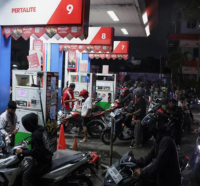
Pertamina raises fuel prices by almost a third in first since start of Iran War
Indonesian state-owned energy firm Pertamina has raised some fuel prices by almost a third since the start of the Iran War. Read more.
Summary: The price of 92-octane gasoline, known as Pertamax, has been raised to IDR 16,250 per litre from IDR 12,300 per litre, a 32.1% increase. Meanwhile, Pertamax Green, a 95-octane fuel blended with ethanol, has been raised to IDR 17,000 per litre from IDR 12,900 per litre, a 31.8% rise. The price rises follow Bank Indonesia unexpectedly raising interest rates for the second time in a month on 9 June to shore up confidence in the currency.
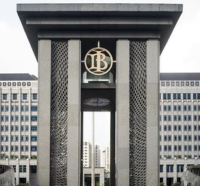
Bank Indonesia may raise interest rates again to bolster rupiah
According to analysts, Bank Indonesia may raise interest rates again to bolster the rupiah and curb market volatility. Read more.
Summary: On 9 June, Bank Indonesia unexpectedly lifted its benchmark BI-Rate by 25 basis points to 5.5%, more than a week ahead of its next scheduled meeting, after the rupiah hit fresh lows and breached the 18,000-per-dollar level last week. In response to this, the rupiah extended gains to 0.8% against the dollar, while the benchmark Jakarta Composite Index rose 7.6%, its best one-day performance since March 2020.
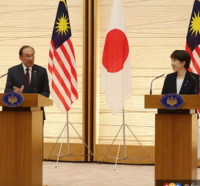
Malaysia agrees to provide Japan with maximum supply of LNG and naphtha
Malaysia has agreed to provide Japan with two million tonnes of LNG annually over 20 years from 2028. Read more.
Summary: Malaysian state-owned oil and gas company Petronas signed the agreement to supply LNG to Japanese power generation company Jera during Malaysian Prime Minister Anwar Ibrahim’s recent visit to Japan. Japan currently imports some 15% of its LNG from Malaysia, its second-largest supplier after Australia. Malaysia and Japan also discussed cooperation in defence, maritime safety and security, energy transition, financial cooperation, human capital development, artificial intelligence (AI), semiconductors, critical minerals, and resilient supply chains. Anwar stated that both countries are also expanding financial cooperation, including through a bilateral swap arrangement and greater use of local currency transactions involving the ringgit and yen.
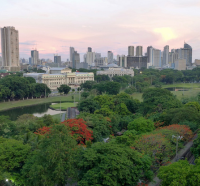
Underemployment rate surges to highest rate in three years in April 2026
In April 2026, the underemployment rate surged to its highest level in three years, rising to 15.2%. This was largely attributed to workers in the transportation sector spending less hours on the road due to high oil prices. Read more.
Summary: According to the Philippines’ statistics agency, the percentage of workers seeking additional hours or jobs rose to 15.2%, the highest since July 2023. The number of underemployed workers increased by 1.4 million from March, with the average hours worked by an employed person declining slightly to 40.2 a week from 40.7 recorded in March. Despite this, the jobless rate eased to its lowest this year at 4.7%, equivalent to 2.4 million unemployed persons.
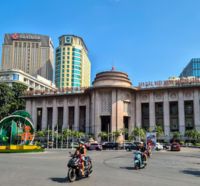
Vietnam to lean towards expansionary fiscal policies rather than monetary policy
According to the deputy governor of the State Bank of Vietnam, Vietnam will lean towards expansionary fiscal policies to meet the government’s growth targets, arguing that there is a narrowing opportunity to use monetary policy. Read more.
Summary: The Vietnamese government is currently targeting annual growth of 10%, while also aiming to keep inflation at 4.5% this year. However, inflation accelerated to 5.6% in May, while the country also recorded a record trade deficit of USD 5.21 billion (attributed largely to the rising cost of energy imports). Vietnam, which often relies on expanding credit to ensure economic growth, targets credit growth of 15% this year.
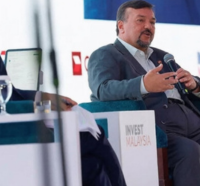
Rising fuel subsidy costs threatening to derail government’s fiscal deficit target
According to Malaysian Finance Minister II Amir Hamzah Azizan, the rising fuel subsidy costs driven by global geopolitical tensions threaten to derail the government’s target of reducing the fiscal deficit to 3.5% of GDP this year. Read more.
Summary: While the Finance Minister has acknowledged that the sharp increase in fuel subsidy expenditure may create new challenges for the government’s fiscal consolidation efforts, the government is nevertheless committed to restoring long-term fiscal sustainability under the Fiscal Responsibility Act (FRA). To offset mounting fiscal pressures, the government has requested government departments to identify non-essential expenditure that can be reduced or deferred, aiming for savings of MYR 10 billion.
STRATEGIC INSIGHTS
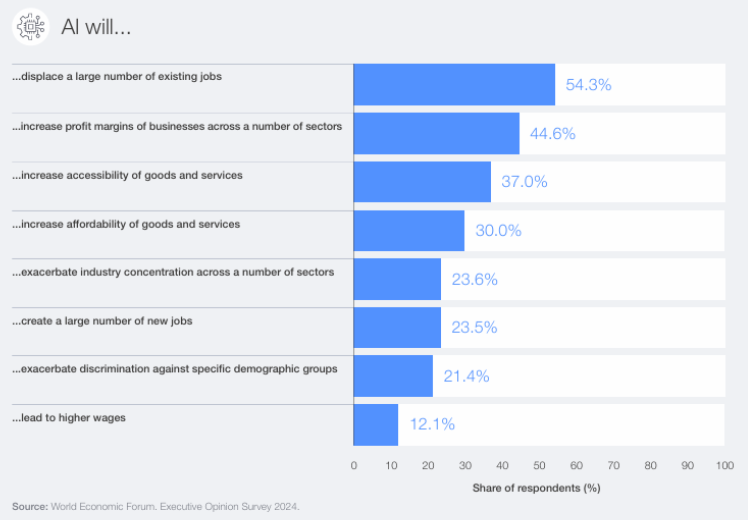
Much has been written on the potential of AI to spark productivity gains within the private sector. However, while AI-augmentation can help improve businesses’ productivity, it is also capable of executing entire job functions, thereby leading to major shifts in labour dynamics. When this happens, the narrative thus shifts from AI-augmentation to AI-induced job elimination. Indeed, a survey of over 10,000 global executives by the World Economic Forum found that about 54% of respondents expect AI to displace existing jobs, while only 24% said AI will drive the creation of new jobs.
Perception of global executives on the impact of AI
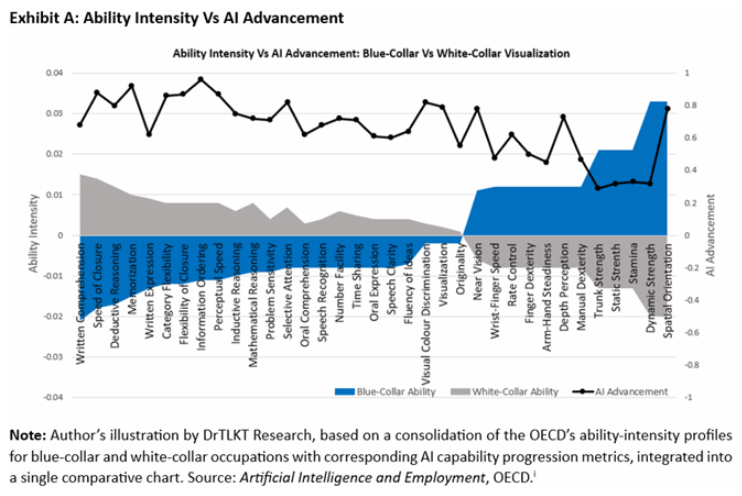
Research by the OECD has found that white-collar jobs are ultimately more susceptible to AI augmentation than blue-collar jobs. The study mapped cognitive and physical abilities and their respective level of intensity for both white-collar and blue-collar jobs. Distinctly, white-collar jobs’ intensity is heavily reliant on abilities listed towards the left side, while blue-collar jobs rely more on abilities listed on the right side. The study also measured the degree of AI advancement on the respective abilities, thereby showing both blue-collar and white-collar jobs’ exposure to AI-augmentation. The study ultimately concluded that white-collar jobs are significantly more augmentable than blue-collar jobs.
THE WEEK AHEAD: STRATEGIC WATCHLIST

USA Artificial Intelligence Summit 2026 (17 June 2026)
Why it matters: The USA Artificial Intelligence Summit 2026 will convene policymakers, industry leaders, researchers, and technology innovators to discuss the future direction of AI and its implications for economic competitiveness, governance, and international cooperation. Key discussions will examine the implementation of the U.S. AI Action Plan and National AI Legislative Framework, alongside issues such as AI infrastructure, public trust, regulatory approaches, AI adoption in government, and global leadership in artificial intelligence. The summit offers important insights into how the world's leading AI economy is shaping policy and governance frameworks that could influence international standards, investment flows, and AI development strategies worldwide, including in Southeast Asia.
Group of Seven (G7) Leaders’ Summit (15 - 17 June 2026)
Why it matters: This year’s G7 summit will be held in Évian-les-Bains, France. The summit is expected to provide a forum for the G7 economies and emerging economies to discuss and find alignment on today’s global economic challenges, including on trade, development, supply chains, digital governance and more. These are pertinent issues for so-called middle powers and emerging economies such as those in Southeast Asia.
Source: G7 Summit 2026: will this be a middle power moment? | World Economic Forum
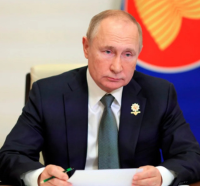
ASEAN-Russia Commemorative Summit (17 - 18 June 2026)
Why it matters: The ASEAN-Russia Commemorative Summit to be held in Kazan, Russia marks the 35th anniversary of diplomatic relations between ASEAN and Russia. Energy security is expected to be a major topic of discussion, with Russia hoping to expand its oil and gas exports to the region, which is being affected by the global energy crisis caused by the ongoing closure of the Strait of Hormuz. It has also been suggested that both parties may use the summit to upgrade their ties to a comprehensive strategic partnership. ASEAN’s bilateral annual trade with Russia stands at USD 26 billion.
Source: As Putin courts Southeast Asia, does ‘Russia need Asean more’? | South China Morning Post
