
THE PAST WEEK
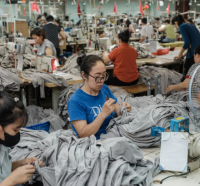
Southeast Asia’s manufacturing purchasing managers’ index rises to 51.5 in May 2026
According to S&P Global, Southeast Asia’s manufacturing purchasing managers’ index (PMI) rose to 51.5 in May 2026 from 50.7 in April. Read more.
Summary: According to S&P Global, factories saw a solid increase in new orders, driven by a surge in domestic demand, which helped offset a fall in exports. Vietnam led the region with a reading of 52.8, followed closely by Thailand at 52.6. The Philippines and Indonesia were also in expansion territory last month, while Myanmar and Malaysia both saw negative readings at 49.3 and 49.9, respectively.
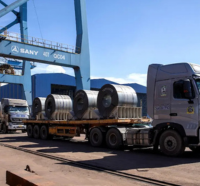
Vietnam’s trade deficit widens to record high of USD 5.21 billion in May 2026
In May 2026, Vietnam’s trade deficit widened to a record high of USD 5.21 billion, well above the median estimate in a Bloomberg News survey for a USD 3.98 billion shortfall, as well as the revised USD 3.99 billion deficit reported for April. Read more.
Summary: Vietnam’s record trade deficit in May was attributed to imports surging due to rising global raw material prices. Vietnam’s exports for that month jumped 18%, while imports were higher than expected at 33.8%. The higher import costs were due to higher energy and semiconductor components, as concerns over global chip shortages and rising prices prompted many companies to increase purchases and build up inventories.
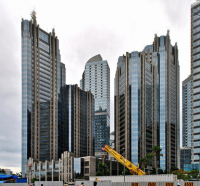
Stocks plunge to lowest in five years while rupiah hits new record low
On 3 June, the benchmark Jakarta Composite Index slid 4.1% to close at its lowest since June 2021, while the rupiah dropped 0.6% to reach a record low of 17,950 per dollar. Read more.
Summary: The selloff in the Jakarta Composite Index reflected investor concerns over Indonesia’s widening fiscal deficit, greater state intervention in the commodities sector and any fallout from a potentially adverse MSCI Inc. reclassification. The JCI is already the worst performer this year among more than 90 global equity indexes tracked by Bloomberg, while the rupiah has dropped around 7% against the dollar this year, the worst performance among global emerging-market currencies.
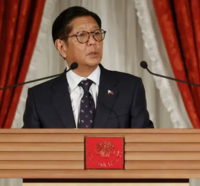
Philippines’ government mulls supplemental budget to help public cope with oil crisis
Philippines President Ferdinand Marcos Jr. stated that his government is considering issuing a supplemental budget to help the public cope with the oil crisis. Read more.
Summary: Marcos Jr. did not specify how much the additional budget will be or how it’s going to be funded and spent. Manila is mulling additional funds to respond to the oil shock as it faces its worst economic crisis since the pandemic. Inflation has surged in the Philippines due to it being heavily dependent on imported oil.
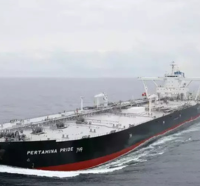
Indonesia’s April 2026 trade surplus lowest in six years
In April 2026, Indonesia’s trade surplus stood at USD 89 million, the smallest monthly surplus in the past 72 months. Read more.
Summary: Indonesia’s low April trade surplus was attributed to a surge in imports of crude oil and refined fuel products. Total oil and gas imports reached USD 4.6 billion in April 2026, an increase of 82.52% from the USD 2.52 billion recorded in April 2025. Indonesia’s total imports reached USD 25.21 billion in April, up 22.49% from USD 20.59 billion in the same month of 2025. Meanwhile, exports reached USD 25.3 billion in April.
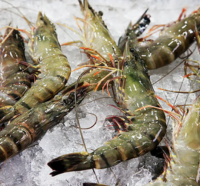
Malaysia’s ban on Thai imports of shrimp causes alarm amongst shrimp farmers
Thai shrimp farmers and coastal fishermen called for immediate help from Thai Prime Minister Anutin Charnvirakul after Malaysia temporarily banned imports of five Thai shrimp species. Read more.
Summary: Malaysia’s decision has caused serious alarm within Thailand’s shrimp production sector given that Malaysia is one of Thailand’s key export markets. They noted that the short notice between Malaysia’s announcement and the enforcement date could hurt Thai exporters’ revenues as well as damage business confidence. Thai exports around 6,000 to 8,000 tonnes of shrimp to Malaysia each year, accounting for about 5% of total Thai shrimp exports. Malaysia’s measure was aimed at strengthening food safety controls.
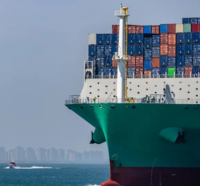
US announces new tariffs on several Southeast Asian economies on forced labour concerns
The US has announced new tariffs of 10% - 12.5% on several trading partners over concerns they are not doing enough to tackle forced labour. Among the 60 listed trading partners included Malaysia, Indonesia, Malaysia, Cambodia, Singapore, and Vietnam. While the US proposed tariffs of 10% on Indonesia, Cambodia, and Malaysia, the remaining 45 countries, which include China and India, would face 12.5% duties. Read more.
Summary: Since the US Supreme Court has struck down US President Donald Trump’s so-called ‘Liberation Day’ tariffs in February of this year, the US government is believed to be utilizing alternative legal tools to exert pressure on trading partners. Besides investigations into forced labour, the US is also investigating trading partners for intellectual property abuse and excess manufacturing.
STRATEGIC INSIGHT
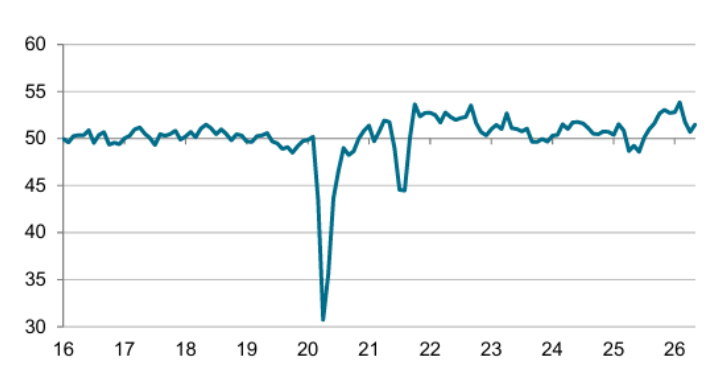
Southeast Asian manufacturing marked a turnaround from the consecutive monthly slowdown since the Middle East conflict began in February. According to S&P Global, Southeast Asia’s manufacturing purchasing managers’ index (PMI) rose to 51.5 in May from 50.7 in April, climbing further above the 50-threshold that separates expansion and contraction. Growth in new orders reached a three-month high, driven by a surge in domestic demand, which helped offset a fall in exports.
S&P Global ASEAN Manufacturing Purchasing Managers Index, 2016 - 2026
Original chart can be found here
THE WEEK AHEAD: STRATEGIC WATCHLIST
Why it matters: OPEC+ ministers will review output policy, with a further hike in their output target for July very likely. However, the ongoing war in Iran and the closure of the Strait of Hormuz means that several members will struggle to meet their delivery targets. OPEC+ production decision will feed directly into Southeast Asia’s economic health, given that the region imports roughly a third of its oil and gas from the Middle East.
Source: OPEC+ likely to raise July oil output target despite Hormuz disruption, sources say | Reuters
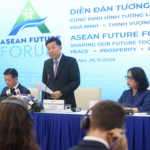
Why it matters: The ASEAN Future Forum 2026 provided a platform for regional leaders, policymakers, academics and industry representatives to exchange ideas on strengthening ASEAN’s resilience, unity and long-term competitiveness amidst an increasingly complex global environment. Discussions are expected to center on regional integration, economic transformation, sustainable development, emerging technologies, and strategic responses to geopolitical challenges.
Source: ASEAN FUTURE FORUM 2026

Why it matters: Organized by Nikkei, the Future of Asia is an international gathering where political, economic, and academic leaders from the Asia-Pacific region offer their opinions frankly and freely on regional issues and the role of Asia in the world. Considered one of the most important global forums in Asia. Among the Southeast Asian leaders attending this year’s forum are Malaysian Prime Minister Anwar Ibrahim, Timor-Leste President Jose Ramos-Horta, Laotian Prime Minister Sonexay Siphandone.
Source: NIKKEI FORUM FUTURE OF ASIA 2026 | June 10 (Wed) - June 11 (Thu)
