
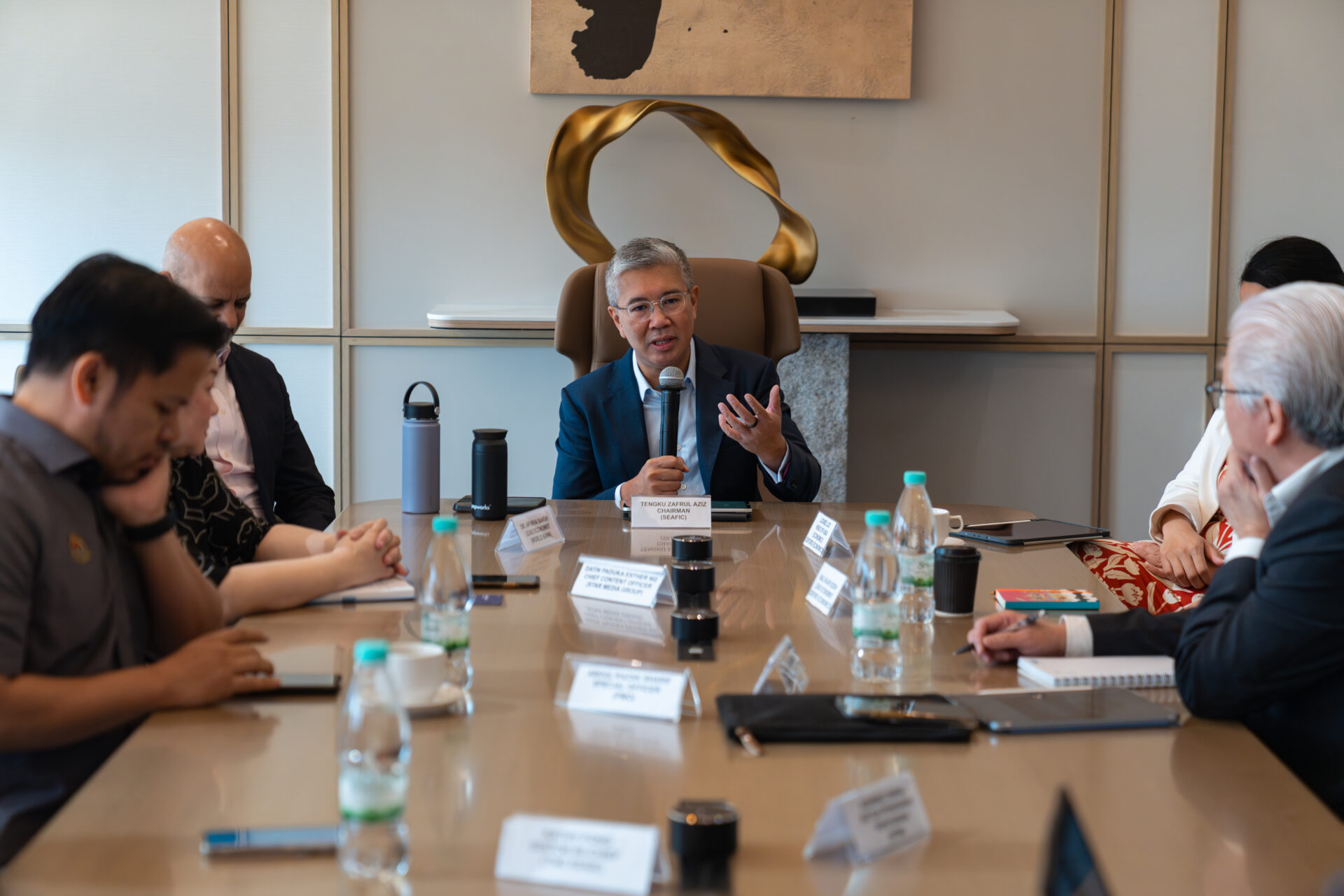
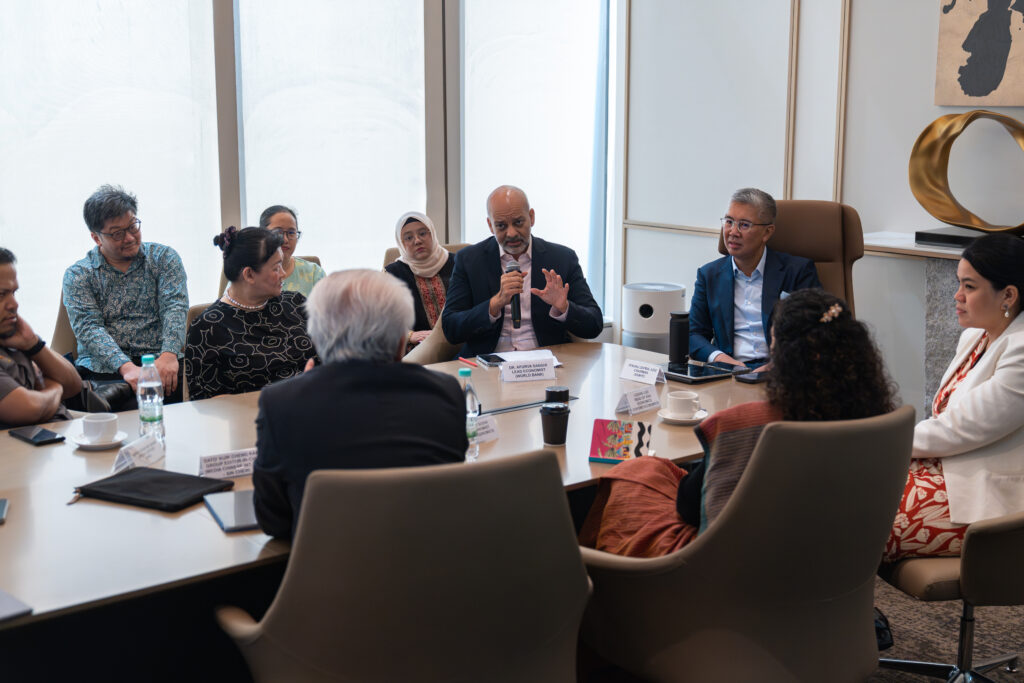
KUALA LUMPUR, 29 April 2026 - The Southeast Asian Futures Initiative Centre (SEAFIC) today convened its first SEAFIC-ASEAN Roundtable #1, “Impact of the Global Energy Crisis on ASEAN”, bringing together senior editors, economists, policy researchers and policy practitioners for a closed-door discussion on the implications of the recent Iran-Hormuz crisis for ASEAN economies.
The roundtable session considered how the Strait of Hormuz chokehold on oil and other key commodities could affect ASEAN not only through energy prices, but also through transport costs, insurance premiums, industrial inputs and supply-chain linkages, resulting in inflationary pressures on prices, which eventually could lead to the disruption and destruction of demand.
The discussion centered on SEAFIC’s inaugural in-house report on ASEAN supply-chain vulnerability under a Hormuz disruption. The paper argues that border-trade figures alone provide an incomplete picture of vulnerability because some sectors inherit exposure through domestic and global supply chain networks.
Specifically for Malaysia, the paper posits that exposure is concentrated rather than economy-wide. Petroleum refining is identified as a key transmission channel, while some downstream sectors, including poultry and livestock, appear less exposed at the border but become more relevant once exposure through fertiliser, feed and other upstream inputs are considered.
At the ASEAN level, the paper distinguishes among refining-hub exposure, manufacturing embedded exposure, logistics-driven pass-through and indirect exposure through neighbouring supply chains. This distinction matters because countries exposed through refining, manufacturing inputs, freight costs or regional spillovers are unlikely to need the same policy response.
The roundtable also included a regional economic briefing by Oxford Economics, followed by a moderated discussion with invited discussants. No individual remarks from the closed-door discussion are attributed in this release.
Chairman of SEAFIC, Tengku Datuk Seri Utama Zafrul Aziz, said “The aim of this roundtable was to move the discussion beyond headline fuel prices. For ASEAN, the real policy challenge is understanding how a shock travels through production and supply chain networks: where it enters, which sectors absorb it, and when it begins to be felt by households and businesses.
This is where behavioural change and a greater sense of urgency become critical. The impact is neither uniform nor immediate; each country experiences the shock differently, depending on its economic structure, energy dependence, and policy buffers. Recognising these differences is essential to shaping timely, targeted, and effective responses.”
The discussion will inform subsequent work under its ASEAN Monitor series, including further analysis of critical inputs, supply-chain concentration and practical regional coordination. The full paper contains the detailed methodology, country-level findings and sectoral analysis and can be downloaded via www.seafic.org.

ASEAN-GCC-China: A Brave New World?