
THE PAST WEEK

Johor polls result raises stakes for Anwar in upcoming Negeri Sembilan election
Prime Minister Anwar Ibrahim and his Pakatan Harapan (PH) coalition need to demonstrate they can campaign effectively in a state where the incumbent Menteri Besar (Chief Minister) is from Parti Keadilan Rakyat (PKR) - his own party. Read More.
Summary: PM Anwar Ibrahim and PH face high stakes in the upcoming Negeri Sembilan state election on 1 August 2026. This comes after a poor electoral performance in the Johor state election on 11 July 2026, where Barisan Nasional (BN) swept 48 out of 56 seats, while PH slid from 12 seats to eight, with the Democratic Action Party (DAP) losing four traditional strongholds to BN partners. Analysts point out that PH must exploit its incumbency advantage under chief minister Aminuddin Harun to retain Negeri Sembilan, and that Anwar needs to prove he can campaign effectively in a state led by his own PKR party; failure could intensify pressure on him to call a snap general election. The piece frames the contest as a test of whether BN's ‘blue wave’ momentum can travel beyond its Johor stronghold, where it enjoyed incumbency, organisational strength and a popular Menteri Besar in Onn Hafiz Ghazi — advantages it lacks in Negeri Sembilan — potentially by leaning on positive momentum or striking an unofficial pact with PAS to consolidate the Malay vote and erode PH's support.
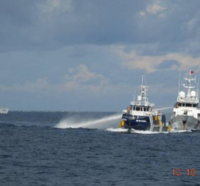
Philippines Issues Formal Protest to China Over ‘Dehumanizing’ State Media Video
The Department of Foreign Affairs (DFA) demanded the ‘immediate takedown’ of the AI-generated video created by a Chinese state media outlet that portrays the Philippines as a monkey. Read more.
Summary: An AI-generated video published by state-controlled outlet China Daily on 10 July that depicts the Philippines as a monkey in traditional dress being manipulated by the US and Japan, then thrown into the sea and blasted with a water cannon by the China Coast Guard. Manila has condemned the portrayal as demeaning, dehumanising, and racist. The 58-second clip mocks the 2016 Hague arbitral ruling, which invalidated China’s expansive ‘nine-dash line’ claims under UNCLOS. Defense Secretary Gilberto Teodoro called it evidence of ‘the moral and intellectual bankruptcy of China's propaganda machine,’ while the DFA summoned Chinese Ambassador Jing Quan, demanded the immediate takedown of the offensive material, and warned it only deepens bilateral distrust. The protest comes just after the ruling's 10th anniversary, which drew supporting statements from 14 nations and the EU affirming the decision as final and legally binding — a verdict China still rejects as ‘null and void’ as its coast guard continues to confront Philippine vessels. The article notes that although the video's media origin gives Beijing plausible deniability, it reflects China's broader tendency to cast the Philippines as a US proxy rather than an actor with legitimate security concerns.

ASEAN Oil Stockpile Ambition: Destined for the Same Old Fate?
ASEAN leaders discussed a prospective ASEAN oil stockpile at the 48th ASEAN Summit in May 2026 as an effort to bolster regional energy security. Dr. Elbinsar Purba from ISEAS - Yusof Ishak Institute argues that the energy security plan risks shelving unless ASEAN moves quickly to institutionalise its oil stockpile ambitions with a workable implementation plan. Read more.
Summary: ASEAN’s renewed push for a regional oil stockpile at the 48th ASEAN Summit is likely to stall just as earlier attempts have since 1986, unless it is quickly institutionalised with a concrete implementation plan. The rationale is sound; SEA will account for roughly a fifth of global energy demand through 2035 with inadequate reserves across ASEAN Member States (AMS), compounded by continued dependency on Middle Eastern O&G imports. Yet, past initiatives such as the ASEAN Petroleum Security Agreement (1986, updated 2009) and various ASEAN+3 working groups failed to progress beyond frameworks and roadmaps into actual implementation. The author warns that momentum will fade if global energy prices stay stable, and recommends the adoption of binding instruments, implementation roadmaps, and to consider cost-reducing models such as ‘ticket’ systems, and utilising the ‘ASEAN Minus X’ formula to launch a pilot with willing AMS rather than awaiting consensus.

From Exporting Workers to Importing Them: Vietnam’s New Labour Reality
Vietnam is undergoing a structural transition from being a major exporter of labour to becoming an importer of foreign unskilled workers; a trend expected to continue long-term. Read more.
Summary:The author posits the shift in labour movement reflects economic success rather than weakness, especially when Vietnam’s ageing population and slowing workforce growth are opening persistent labour gaps that domestic supply can no longer fill. For instance, Bac Ninh Province alone needs over 230,000 new workers in 2026, yet job fairs fill fewer than 10% of advertised positions, and the Long Thanh International Airport project faced a shortfall of roughly 5,500 against its 14,000-worker requirement. As the economy upgrades, Vietnamese workers are gravitating toward higher-skilled, better-paid and more flexible roles and shunning manual labour, leaving low-end positions vacant. The author draws parallels of Vietnam with South Korea's earlier trajectory from labour exporter to importer and notes that current rules restricting foreign hiring to managerial and technical roles warrants a rethink to ensure businesses fill up genuine shortages through foreign unskilled workers, while safeguarding domestic employment and guarding against wage suppression.
S&P maintains Indonesia credit rating, saying fiscal strains could be temporary
Credit ratings agency S&P affirmed Indonesia's BBB/A-2 sovereign credit ratings on 13 July 2026, noting the temporal nature of recent fiscal strains that could be offset by stronger commodities prices and cuts in fiscal spending. Read more.
Summary: The agency cited Indonesia's solid growth prospects and relatively low net external and government debt, and said it expects government revenue to keep recovering this year while export receipts rebound on higher commodity prices. It acknowledged near-term headwinds such as elevated global energy prices, a weaker rupiah, high interest rates and uncertainty around policy implementation under President Prabowo Subianto, but treated these as transient rather than structural. The decision offered Indonesia some relief, standing in contrast to Moody's and Fitch, which had both cut their outlooks on Indonesian debt to negative earlier in the year (February and March respectively), citing weakened policymaking credibility amid rising fiscal concerns.
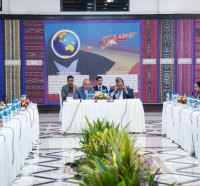
Timor-Leste accelerates preparations for ASEAN Chairship 2029
Foreign Minister Bendito dos Santos Freitas chaired the first meeting of the Executive Committee (ExCom) of the National Organizing Commission for Timor-Leste's ASEAN Chairship 2029 (ACNOC). Read more.
Summary: The first Executive Committee meeting of the National Organizing Commission (ACNOC) chaired by Timor-Leste's Foreign Minister Bendito dos Santos Freitas chaired on 16 July 2026 was set to prepare for the country's ASEAN Chairship in 2029, which he called the largest diplomatic undertaking in the nation's history requiring a ‘Whole-of-Government and Whole-of-Nation’ effort. Ministers and senior officials reviewed readiness across five key sectors such as human resources, infrastructure, security, communications and diplomacy, and finance, while setting priority actions for 2026 and preparing for an upcoming high-level meeting to be chaired by Prime Minister Xanana Gusmão, reaffirming the government's commitment to delivering its first credible and successful chairship.
STRATEGIC INSIGHTS
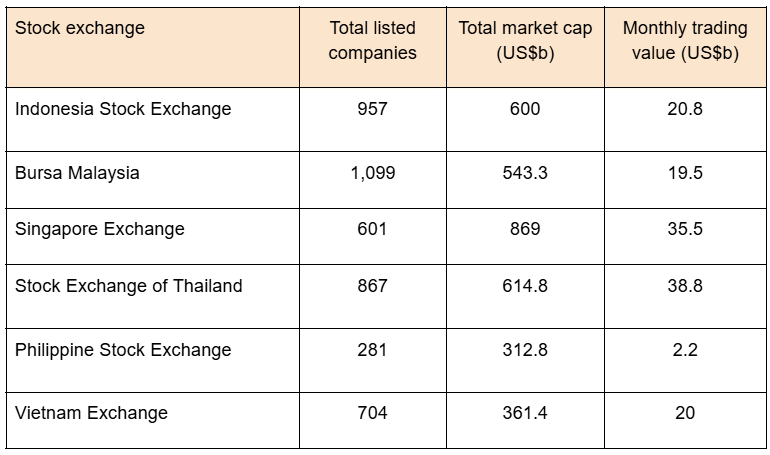
Southeast Asia's equity market hierarchy shifted again in mid-2026. As of end-May, the Singapore Exchange remained the region's largest equity market at US$869.0 billion, a modest 0.9% rise from US$861.1 billion two months earlier.
Below Singapore, the real story is a reversal in the region's second tier: Thailand's listed companies were collectively valued at US$614.8 billion, a 9.1% jump from US$563.4 billion in March, which was enough to overtake Indonesia, whose market capitalization fell sharply by 17.9% to US$600.0 billion from US$730.8 billion over the same period. The ranking now runs Singapore, Thailand, Indonesia, Malaysia, Vietnam, and the Philippines, with the six largest ASEAN markets together worth US$3.301 trillion, up slightly from US$3.285 trillion in March.
The takeaway is that scale alone doesn't guarantee stability and the more significant development isn't just Thailand reclaiming second place, but the diverging trajectories of the region's two largest developing markets, with Thailand's rebound (aided by a rally after an initial sell-off tied to the Iran conflict) contrasting against Indonesia's sharp pullback despite the IDX Composite's strong start to the year. For investors and issuers, this reinforces that ASEAN capital markets should be read as a dynamic, reshuffling bloc rather than a fixed pecking order — a single quarter's macro shock or liquidity shift can move hundreds of billions in relative market value between exchanges.
Source: Business Times
THE WEEK AHEAD: STRATEGIC WATCHLIST
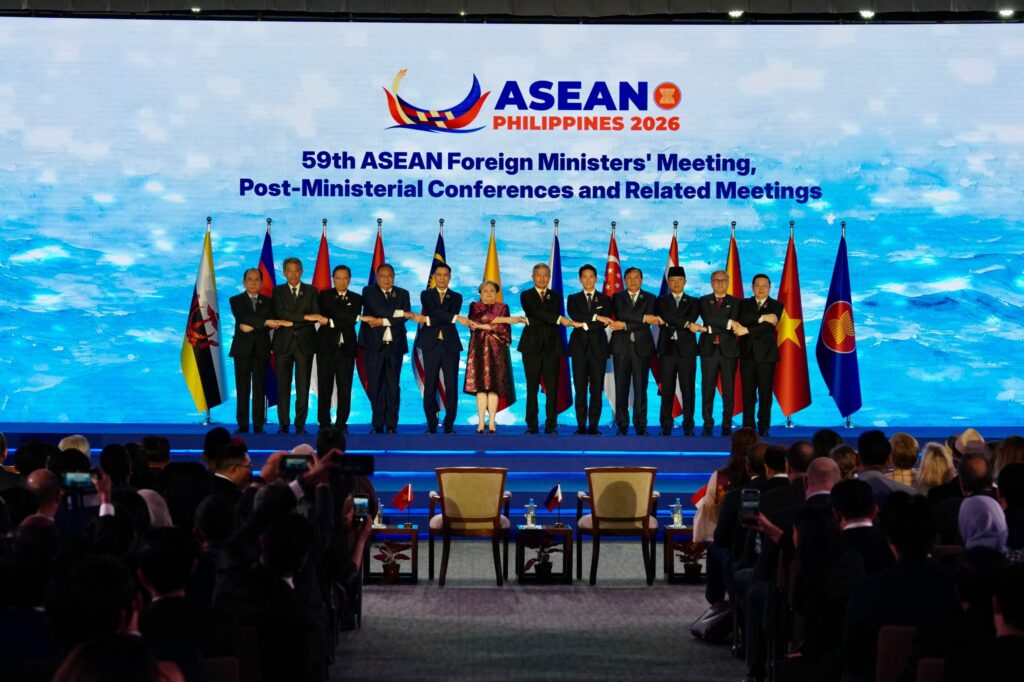
59th ASEAN Foreign Ministers (AMM) Meeting (18 - 24 July 2026)
Why it matters: Convening in Manila, the 59th AMM (and its related meetings) serve as a major test of the Philippines’ ASEAN Chairmanship, where Manila leads ASEAN under the shadow of the U.S.-Iran conflict, where energy price shocks led to the scaling down of ASEAN preparatory meetings to the online sphere, in addition to contending with two contentious regional issues; Myanmar and the South China Sea.
On Myanmar, the meeting follows the first in-person engagement between ASEAN foreign ministers and a Myanmar representative since the 2021 coup, where ministers will utilise an extended informal consultation (with the exclusion of Myanmar’s permanent secretary) to weigh the next steps on the stalled Five-Point Consensus, amid Thailand’s push for "calibrated re-engagement" that could reshape how the bloc handles the Myanmar junta.
Meanwhile, on the South China Sea, the Philippines assumed the ASEAN Chairmanship on the year of the 10th anniversary of the 2016 South China Sea Arbitral Award against a backdrop of coast guard clashes and inflammatory state-media propaganda from Beijing. The AMM's tone will signal how hard ASEAN is willing to push on a binding Code of Conduct (COC), and whether a claimant-chair can forge consensus without fracturing the bloc's relations with China. Because the AMM sets the agenda and diplomatic mood for the subsequent East Asia Summit and dialogue-partner meetings, it is an early read on ASEAN's cohesion and centrality heading into a year defined by intensifying US-China rivalry. Watch for the language of the Joint Communiqué, any movement on the COC timeline, and how Myanmar is handled in both seating and text.
Source(s):
Energy crisis: Manila moves some ASEAN events online
ASEAN FMs To Discuss ‘Next Steps’ To Take On Myanmar In Upcoming Meet
Iran war, Myanmar crisis and South China Sea rifts under the spotlight in ASEAN ministerial talks
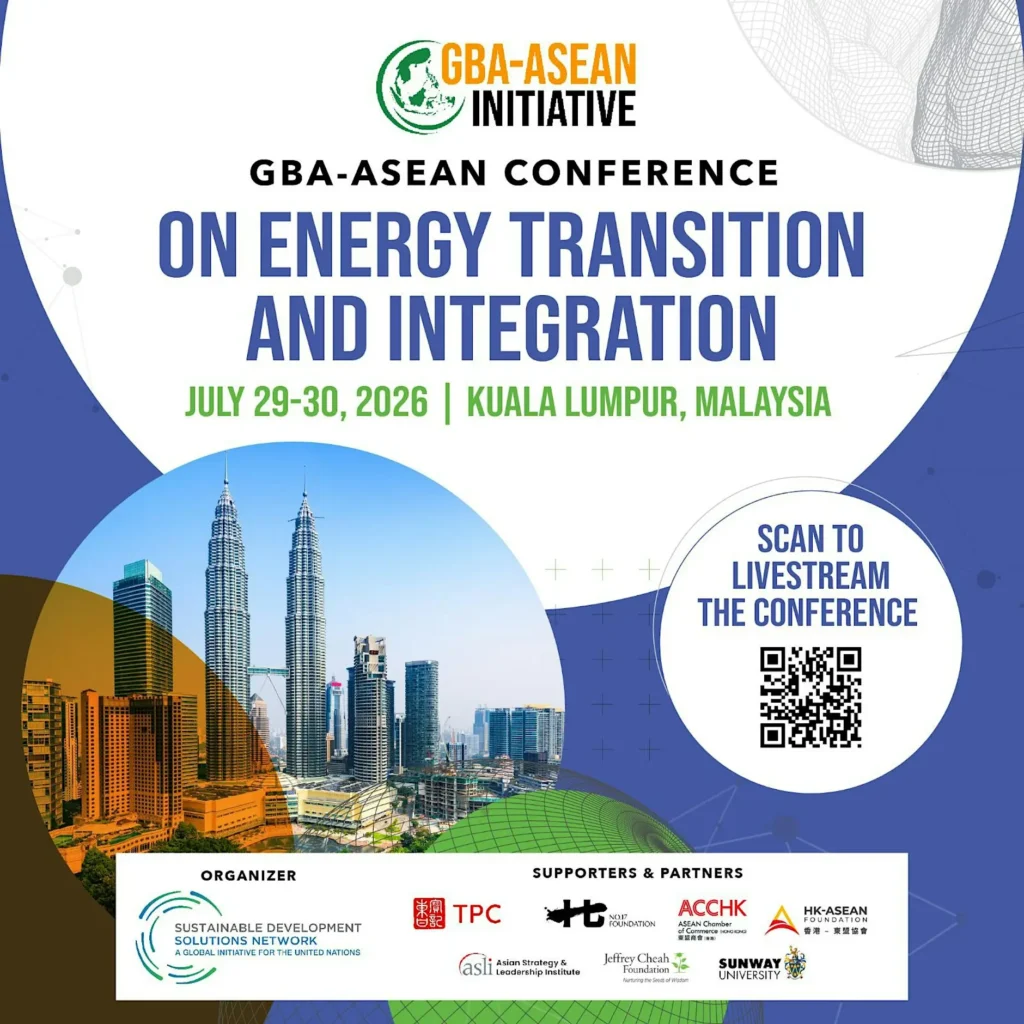
2026 GBA-ASEAN Conference on Energy Transition and Integration (29 - 30 July 2026)
Why it matters: The conference, held in Kuala Lumpur under the SDSN-led GBA-ASEAN Initiative, convenes government, business, and academic leaders from ASEAN and China's Greater Bay Area to turn energy cooperation into concrete investment commitments. It comes at a pivotal moment as ASEAN begins implementing APAEC 2026–2030 and the ASEAN Power Grid moves from planning to construction. With electricity demand booming, gas fields aging, and import dependence rising, the forum signals where GBA capital and technology will flow into the region's energy transition, with implications for energy security, investment, grid integration, and investor confidence across Southeast Asia.
Source: GBA-ASEAN Conference

Manila Tech Summit 2026 (28 - 29 July 2026)
Why it matters: The summit brings together over 4,000 government officials, regulators, investors, and tech leaders in Manila while the Philippines chairs ASEAN this year. It is a key venue for turning the ASEAN Digital Economy Framework Agreement (DEFA), the region's plan for a single digital market, from talk into action. Talks will cover cross-border payments, AI, digital money, cybersecurity, and data rules, all of which shape how money and data move across the region. The results will show how fast ASEAN can build a connected digital economy, affecting investment, small businesses, and the region's competitiveness.
Source: Manila Tech Summit
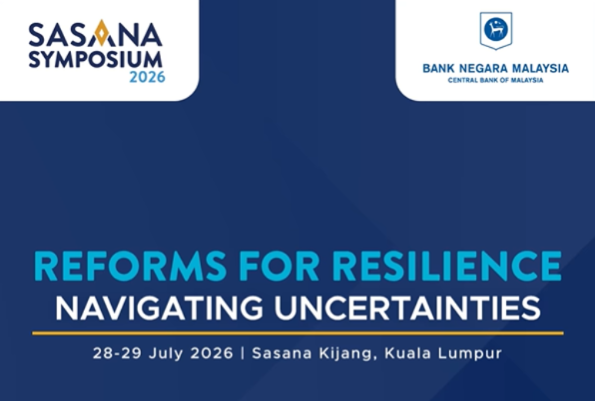
Sasana Symposium 2026 (28 - 29 July 2026)
Why it matters: The symposium is Bank Negara Malaysia's flagship annual dialogue, bringing the central bank's economic and financial stability assessments to life through panels with policymakers, industry, and researchers. It carries weight for ASEAN because BNM has used the platform to push regional priorities: cross-border payment linkages with Indonesia, Singapore, and Thailand, climate finance for building climate-resilient ASEAN economies, and digital asset regulation. The discussions offer early signals on Malaysia's monetary policy thinking and financial reforms, which shape regional financial integration, capital flows, and investor confidence given Malaysia's role as one of ASEAN's key financial centres.
Source: Sasana Symposium 2026
