
THE PAST WEEK
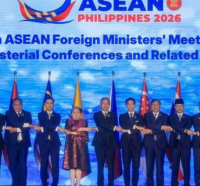
Manila hosted the 59th ASEAN Foreign Ministers' Meeting and related sessions (July 20–24), including the ASEAN Plus Three FMM, East Asia Summit FMM, the ASEAN Regional Forum, and a commemorative event marking the 50th anniversary of the Treaty of Amity and Cooperation in Southeast Asia.
ASEAN member states and partner nations have wrapped up four days of talks in Manila. Maritime security concerns - from the Strait of Hormuz to the South China Sea - have emerged as the hottest topic at this week's ASEAN meetings in the Philippines. Read more.
Summary: Manila hosted the 59th ASEAN Foreign Ministers' Meeting and Related Meetings (July 20–24, 2026) under the theme "Navigating Our Future, Together,". Around 120 bilateral meetings took place over the four days. Some top diplomats attending included the US's Marco Rubio, China's Wang Yi, and Russia's Sergey Lavrov, plus ministers from Australia, New Zealand, India, Japan, and the EU — making it one of ASEAN's most high-profile gatherings of the year.
The main focus of the meeting were the fallout from the Middle East crisis on Southeast Asia (trade, energy/food security, supply chains), progress on ASEAN community-building, the TAC's 50th anniversary which also included the admission of Sweden, Poland, Romania, preparations for the November ASEAN Summits in the Philippines.

U.S. Slaps 10–12.5% Section 301 Tariffs on 60 Nations Over Forced-Labor Enforcement Failures — Philippines, Singapore, Thailand, Vietnam Hit Hardest Among 7 ASEAN Economies
A new wave of US tariffs that hit seven Southeast Asian countries is set to reinforce perceptions of Washington as an unreliable partner to the region, according to analysts. Read more.
Summary: New US tariffs on seven ASEAN countries are threatening to undermine the credibility of the Trump administration in Southeast Asia. This comes after the US imposed Section 301 tariffs of 10-12.5% on 60 economies effective 24 July 2026, citing forced-labour practices uncovered in USTR investigations, with the Philippines, Singapore, Thailand, and Vietnam facing the steepest levies among ASEAN members, while Malaysia, Indonesia, and Cambodia landed on the lower end after showing stronger enforcement efforts.
USTR Jamieson Greer said the move would "correct what is both a human rights abuse and distortive trade practice," while US ambassador to ASEAN Kevin Kim said Washington is "pursuing fair and reciprocal trade." The piece frames the tariffs as reinforcing perceptions of the US as an unreliable partner to the region, noting the striking timing — the levies came just a day after Secretary of State Marco Rubio told Southeast Asian foreign ministers in Manila, at a meeting also attended by China's Wang Yi, that the US was "with Asean 100%."
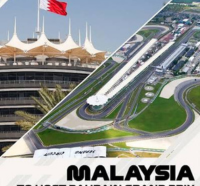
Malaysia returns to F1 calendar, will host 2026 Bahrain Grand Prix at Sepang
Formula 1 and the FIA have confirmed Malaysia's Sepang International Circuit will host the 2026 Bahrain Grand Prix from October 2-4, marking Malaysia's first F1 race since 2017. Read more.
Summary: Formula 1 and the FIA have confirmed that Malaysia's Sepang International Circuit will host the 2026 Bahrain Grand Prix, scheduled for October 2–4, marking Malaysia's return to the F1 calendar for the first time since 2017. The race will still be officially titled the "Bahrain Grand Prix," with the Gulf state funding the event as a show of support for the sport, even though it's being run on Malaysian soil. The move comes after the original Bahrain and Saudi Arabian Grands Prix were cancelled earlier this season due to the ongoing conflict in the Middle East, which had trimmed the 2026 calendar down to 22 races. Rather than leaving the slot empty, F1, the FIA, and the governments of Bahrain and Malaysia struck a deal to relocate the race to Sepang — a venue F1 chose partly for its proximity (about 300km) to Singapore. Malaysia previously hosted F1 annually from 1999 to 2017 before pulling out over declining ticket sales and rising hosting costs.
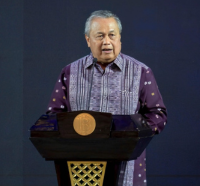
Indonesia’s central bank governor resigns as economy enters tailspin
Indonesia’s central bank governor has resigned early as the country battles a weakening currency and other economic woes sparked by the Middle East war, the government said Monday. Read more.
Summary: Perry Warjiyo served as Governor of Bank Indonesia for about 8 years from May 24, 2018, until his resignation on July 27, 2026. He resigned amid economic challenges, including a weakening currency due to the Middle East war. President Prabowo Subianto has accepted his resignation, citing Perry's personal reasons for stepping down. Destry Damayanti has been appointed as interim governor. The country's economy faces pressures from surging energy costs, with the currency being Asia's worst performer, leading to significant domestic inflation and public unrest over fiscal policies and fuel prices.
Perry was first appointed in 2018 under President Joko Widodo and was reappointed for a second five-year term in 2023, which he didn't complete due to his early resignation. Warjiyo's exit adds a fresh layer of uncertainty to Indonesia's economic management under Prabowo.
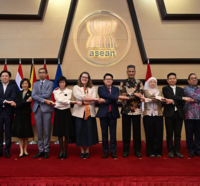
ASEAN and Canada completed 19 of 26 chapters in their proposed free trade agreement (ACAFTA), pushing past the 80% completion mark
ASEAN and Canada are nearing the finish line on a free trade deal, with 19 of 26 chapters done. Read more.
Summary: ASEAN and Canada held the 19th ASEAN-Canada Free Trade Agreement negotiating committee meeting in Jakarta hosted by the ASEAN Secretariat. Seven additional chapters were concluded at this round — intellectual property, legal text on trade in services, rules of origin text, technical barriers to trade, investment, the preamble, and transparency/anti-corruption provisions — bringing the total to 19 of 26 chapters completed, or over 80% of the agreement. Still outstanding are trade in goods, government procurement, trade and sustainable development, and final market-access commitments for goods, services, and financial services, with both sides agreeing to continuous intersessional meetings, in-person and virtual, and pledging flexibility to reach a "commercially meaningful" deal by the ASEAN Leaders' Meeting in November 2026.
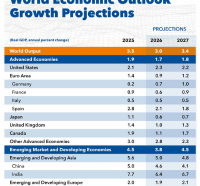
Growth holds up, but remains uneven, as tech momentum offsets war drag
The IMF's July 2026 World Economic Outlook Update projected global growth at 3.0% for 2026, noting the war shock is weighing on energy importers and vulnerable economies even as AI-driven demand lifts countries integrated into global tech supply chains. Read more.
Summary: ASEAN economies are mostly benefiting from the AI/tech boom, even as they deal with higher energy costs. ASEAN-5 (Indonesia, Malaysia, Philippines, Singapore, Thailand): Growth expected at 4.1% in 2026 and 4.3% in 2027 — a bit slower than 2025's 4.5%, but roughly in line with earlier forecasts.
By country:
- Malaysia — 4.7% growth in 2026, unchanged from before, driven by data centers and the tech upswing. It's one of the world's top 4 AI-hardware exporters.
- Thailand — 1.9% in 2026, revised up, thanks to fiscal support and strong tech exports.
- Vietnam — 7.5% in 2026, revised up, on the back of surging tech exports and solid domestic demand.
- Indonesia — steady at 5.0%, unchanged — less tech-exposed but stable.
- Philippines — cut to 3.9% in 2026, the one downgrade in the group, though it's expected to bounce back to 5.5% in 2027.
STRATEGIC INSIGHTS
AI-exposed jobs in ASEAN are growing, not vanishing
The figures challenge the common perception that AI will simply eliminate jobs. Instead, ASEAN's labour market appears to be recomposing: the most AI-exposed occupations are growing fastest, and early adoption evidence suggests the technology is transforming tasks within jobs rather than replacing the jobs outright.
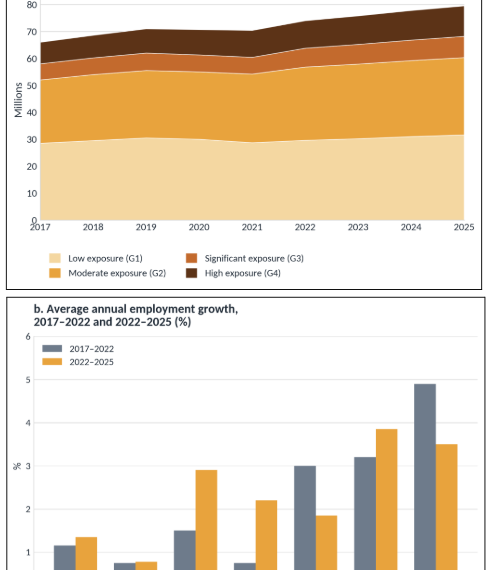
Figure A shows total employment in occupations with some degree of GenAI exposure, climbing steadily from around 66 million workers in 2017 to 80 million in 2025, or 22.9 percent of all ASEAN employment. The thin dark band at the top is the highest exposure group (G4), which accounts for just 3.3 percent of employment, a reminder that the jobs most technically automatable remain a small slice of the region's labour market.
Figure B shows how fast each group grew. High exposure occupations expanded by nearly 5 percent a year between 2017 and 2022, faster than any other category, and kept growing at around 3.5 percent even after generative AI went mainstream in late 2022. The ILO attributes this to ASEAN's structural shift toward services and knowledge work rather than to AI itself.
However, there are two caveats; growth in the most exposed occupations has moderated since 2022, and in the Philippines and Thailand, employment among young workers in entry-level clerical roles has declined even as overall youth outcomes held steady. Exposure is not destiny. The outcome will turn on preparedness, and ASEAN currently spans a wide readiness gap with Singapore far ahead.
Figure a and b refers to employment in ASEAN by level of GenAI Exposure
GenAI exposure categories and their interpretation (Page 2)
Source: International Labour Organization (ILO)
THE WEEK AHEAD: STRATEGIC WATCHLIST
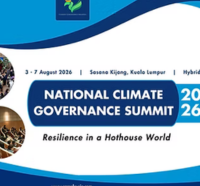
National Climate Governance Summit: Resilience in a Hothouse World (02 - 07 August 2026)
Why it matters: The NCGS 2026 is Climate Governance Malaysia’s flagship board-level climate-governance convening, with its theme signalling a hard pivot from net-zero pledges to credible, governance-led adaptation and transition exactly as physical climate risk starts hitting balance sheets.
For business, finance and policy audiences, this is where directors' fiduciary duty on climate, transition-plan accountability, and resilience get set as regional norms; the summit doubling as a barometer for how ASEAN capital and regulators price climate risk.
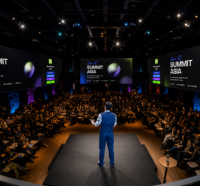
Gen AI Summit Asia 2026 (08 - 09 August 2026)
Why it matters: Large, practitioner/commercial AI-adoption event (billed at ~10,000 attendees, industry-application workshops). More SME/operator-focused than policy — useful for reading the commercial AI demand signal.
Source: https://genaisummitasia.com/en
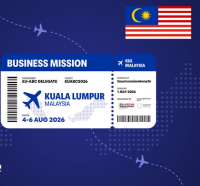
EU-ASEAN Business Council (EU-ABC) Mission to Kuala Lumpur (04 - 06 August 2026)
Why it matters: As the primary voice of European business in the region, the EU-ABC missions put senior EU corporate leadership directly in front of Malaysian policymakers and regulators. The mission to KL serves as a live barometer of the direction of EU-ASEAN trade, investment, and market-access priorities.
The closed-door visits signal an intimate read on the EU’s commercial posture toward ASEAN (digital rules, supply-chain diversification, the green transition, and the stalled EU–Malaysia / EU–ASEAN FTA agenda) at a moment when both blocs are hedging against US–China geopolitical rivalries.
Source: https://eu-asean.glueup.com/event/eu-abc-business-mission-to-malaysia-2026-177862/
