
THE PAST WEEK
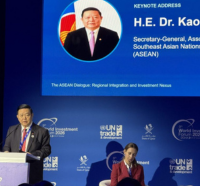
ASEAN Secretary-General outlines Investment Priorities at World Investment Forum in Doha
ASEAN Secretary-General Dr. Kao Kim Hourn set out four priorities for ASEAN’s collective action on investment and stressed the importance of regulatory certainty in attracting FDI. Read more.
Summary: On 25 October 2025, Dr. Kao Kim Hourn delivered a keynote address at the ASEAN Dialogue: Regional Integration and Investment Nexus on the sidelines of the 9th World Investment Forum in Doha, Qatar.
In his remarks, Dr. Kao emphasised four priorities for ASEAN’s collective action: strengthening investment in strategic areas such as energy, critical minerals and food security. He also noted that ASEAN should advance in digital and knowledge based industries, accelerate sustainable development and the green transition, as well as deepen their global investment partnerships.
He also highlighted the role of ASEAN integration, transparency and regulatory certainty in strengthening investor confidence and attracting foreign direct investment (FDI).
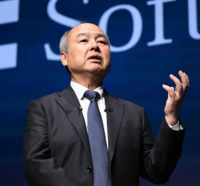
SoftBank Plans USD 50 billion Technology Investment in Malaysia
SoftBank identifies locations in Sarawak and Peninsular Malaysia for proposed investment in AI, emerging technologies and data centres. Read more.
Summary: SoftBank Group founder Masayoshi Son has identified locations in Kuching, Sarawak, and Peninsular Malaysia for a proposed USD 50 billion investment in artificial intelligence (AI), emerging technologies and data centres, according to Malaysian Prime Minister Anwar Ibrahim. The investment could expand SoftBank's presence in Southeast Asia, where demand for AI infrastructure is growing.
Anwar said the proposed investment could create new and better employment opportunities for Malaysians, particularly younger workers. He also emphasised that maintaining investor confidence requires political stability, strong government confidence and a conducive investment environment.
Beyond attracting foreign investment, Anwar highlighted the need to strengthen Malaysia's capabilities in AI, digitalisation and semiconductors, alongside workforce training and skills development. These efforts aim to move Malaysia beyond back-end technology activities towards higher-value segments of the technology industry. The government is also seeking to ensure that data-centre investments generate wider economic benefits through local supply chains, domestic innovation and skilled employment.
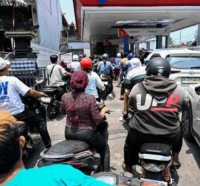
Indonesia cuts gas exports to Singapore
President Prabowo’s government moves to prioritise domestic energy needs amid uncertainty of energy security. Read more.
Summary: Indonesia began cutting natural gas exports to Singapore by 31 billion British thermal units per day (BBTUD) from 24 October 2026. Upstream regulator SKK Migas said pipeline exports from Natuna would fall by 15 BBTUD and supplies from Sumatra, via the Jambi Merang field, by 16 BBTUD, affecting only Singapore. The reduction equals 8% of Indonesia’s 2024 pipeline exports to the city-state.
The move follows remarks by Energy Minister Bahlil Lahadalia, who on 21 October 2026 floated not renewing export arrangements with neighbours and on 22 October 2026 warned he could halt exports to countries that “do not respect” Indonesia. He added that Indonesia exports about 30% of its gas, and wants more directed to domestic industry, particularly petrochemicals.
Jakarta had already agreed in 2022 to extend supplies to 2028 at lower volumes. Singapore’s import contracts expire at the end of 2028, and talks on cross-border electricity trade remain stuck over pricing.
Singapore to make ASEAN Power Grid a 2027 Priority
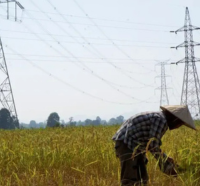
A subsea cable framework to be adopted by next year, with clearer rules to give investors long term certainty. Read more.
Summary: Singapore will work closely with ASEAN member states during its 2027 chairmanship to advance the ASEAN Power Grid (APG), including establishing a regional submarine power cable framework and strengthening cross-border renewable energy trading, said Energy Market Authority chief executive Puah Kok Keong.
Speaking at a media briefing for the 19th Singapore International Energy Week (SIEW), he mentioned that Singapore hopes member states will agree to adopt the subsea cable framework by next year, while also developing a common framework for Renewable Energy Certificates to support investment and prevent double counting. He stressed that regulatory certainty and commercial viability are critical, as projects may take 20 to 30 years to recoup investments.
Puah highlighted that the APG would strengthen regional energy security by letting countries draw power from neighbours during disruptions, citing the Laos-Thailand-Malaysia-Singapore project, which allows Singapore to import up to 200 megawatts from Laos. He added that regional connectivity should complement, not replace, domestic generation, while falling costs have made interconnection more feasible.
Brunei Darussalam Must Accelerate Economic Diversification
Brunei urged to turn investments into jobs, exports and economic growth. Read more.
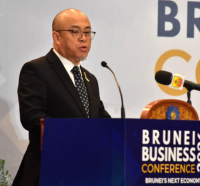
Summary: Brunei Darussalam is seeking to build a more diversified and competitive economy amid global uncertainty, technological change and the transition towards sustainability. Speaking at the Brunei Business Conference 2026, Minister of Economy, Trade and Industry Dato Seri Setia Dr Haji Abdul Manaf bin Haji Metussin identified downstream oil and gas, agri-food, tourism, digital services, logistics, renewable energy and advanced manufacturing as priority growth sectors. Between 2015 and 2025, the non-oil and gas sector’s share of GDP rose from 46% to 54%, while its share of total exports increased from 7% to 60%.
Further progress will require strong regional connectivity, improved port capacity and greater participation by local businesses in regional value chains. The minister also highlighted the need to adapt technology responsibly and align education and training with emerging industry needs. Ultimately, investments should translate into operational projects, contracts for local suppliers, skilled jobs for Bruneians and higher exports, supporting Wawasan Brunei 2035.
Universiti Brunei Darussalam (UBD) and SEAFIC Establish Regional Research Partnership
UBD and SEAFIC sign a Memorandum of Understanding (MoU) to strengthen regional research and policy collaboration. Read more.
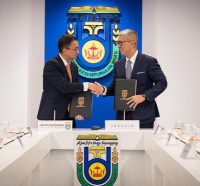
Summary: UBD and SEAFIC established a partnership through the signing of an MoU on 26 October 2026 to collaborate on research and policy engagement. The partnership will explore topics such as climate change, environmental governance, sustainable development, business, economics, trade and investment.
The agreement provides for collaboration on research initiatives, academic publications, policy discussions, and capacity-building activities. It also aims to connect researchers with policymakers and industry, creating opportunities for academics, postgraduate students and early-career researchers to contribute to regional policy discussions.
As the first joint initiative, SEAFIC and UBD conducted a roundtable on climate research and regional environmental governance in Southeast Asia, with support from the Brunei Economy Programme. Participants from academia, government and industry discussed transboundary haze pollution and how research can inform environmental policymaking. The session also helped identify shared research priorities and potential joint publications.
The partnership provides a basis for further research into regional challenges, including climate change and environmental governance, with the aim of informing policy discussions across Southeast Asia.
STRATEGIC INSIGHTS
Malaysia carries most of ASEAN's data centre power demand
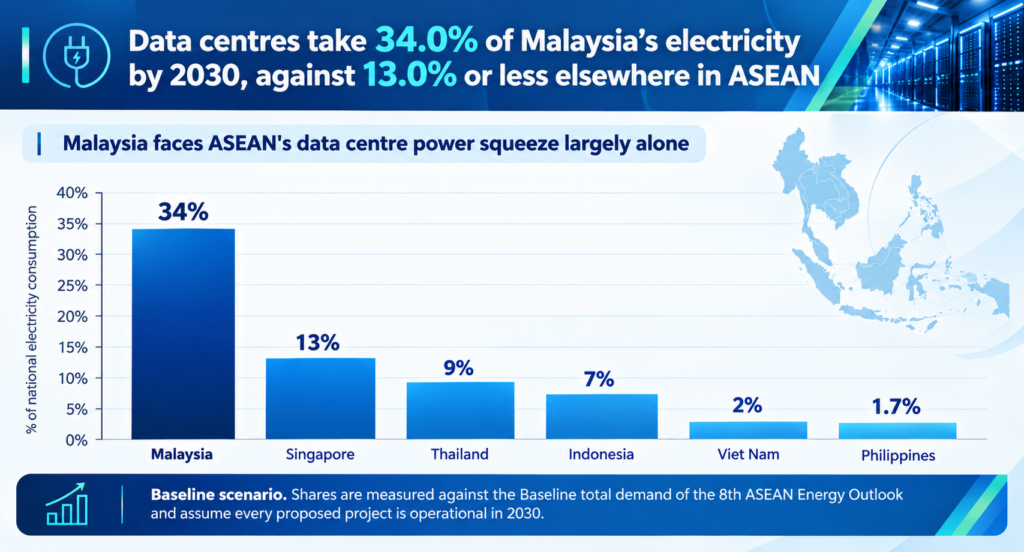
Under the ASEAN Centre for Energy (ACE) baseline scenario, data centres will use 34% of Malaysia's national electricity in 2030, about 2.6 times Singapore's share and 20 times the Philippines'. The other five shares are 13% in Singapore, 9.0% in Thailand, 7.0% in Indonesia, 2.0% in Viet Nam and 1.7% in the Philippines. Malaysia's own share was 18.0% in 2025, so the baseline nearly doubles it inside five years. In ACE's high scenario, data centres take around half of national consumption.
Two of ACE's assumptions raise these shares. It divides data centre load by the baseline total demand in the 8th ASEAN Energy Outlook, and it counts every proposed project as operating by 2030. If total demand grows faster than the 8th Outlook assumed, every share falls. If some projects are never built, the shares fall further. The 9th ASEAN Energy Outlook, launched on 8 October 2026, attributes about one-fifth of ASEAN's electricity demand growth between 2025 and 2030 to data centres.
Johor and Selangor carry most of Malaysia's load. The Ministry of Energy Transition and Water Transformation (PETRA) told Parliament on 19 October 2026 that peak data centre demand in Peninsular Malaysia would reach 8.39 GW by 2030, with Johor at 4.42 GW and Selangor at 1.48 GW, and that 45 facilities were operational in August 2026 holding 6.04 GW of contracted grid supply. Projected water demand across the two states reaches 389.04 million litres a day by 2030, against 63.9 million litres a day reported now.
The ASEAN+3 Macroeconomic Research Office (AMRO) estimates that around 30% of the value added from data centre capital expenditure is captured domestically, and that an operating facility supports 30 to 50 permanent jobs. Applications for data centre power supply had already passed 11,000 MW by December 2024, about 40% of Peninsular Malaysia's 27,000 MW of capacity.
Malaysia has three decision points before 2030: the next electricity tariff review, the Johor-Singapore Special Economic Zone pipeline and the 2027 federal budget. Ministries could use them to set grid and water connection charges that reflect scarcity in Johor and Selangor. If they published approved and pending applications by state, readers could see how many of the 11,000 MW are likely to be built, and so how close ACE's all-projects assumption comes to reality. New approvals could also carry conditions on domestic value capture, which would put AMRO's 30% figure to direct use.
Data centres take 34% of Malaysia's electricity by 2030, against 13% or less elsewhere in ASEAN
THE WEEK AHEAD: STRATEGIC WATCHLIST
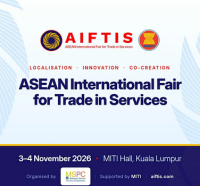
ASEAN International Fair for Trade in Services (AIFTIS) 2026 (03 - 04 November 2026)
Why it matters: The AIFTIS 2026 will take place at Menara MITI in Kuala Lumpur, alongside the China Malaysia Intelligent Industry Expo (CMIIE). The event aims to strengthen Malaysia’s services sector by improving market access, promoting technology adoption and developing workforce capabilities. It will bring together businesses, government agencies, industry associations and technology providers to explore partnerships, business matching and opportunities for cross-border trade. With a focus on productivity, digitalisation and regional cooperation, AIFTIS aims to enhance the competitiveness of Malaysian service providers and strengthen commercial links with ASEAN and Chinese markets. Source: AIFTIS
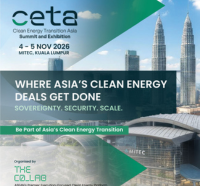
Clean Energy Transition Asia (CETA) 2026 (04 - 05 November 2026)
Why it matters: CETA 2026 will take place at the Malaysia International Trade and Exhibition Centre (MITEC) in Kuala Lumpur, Malaysia. The event will provide a platform for policymakers, energy developers, financiers and technology providers to address the practical challenges of Southeast Asia’s energy transition. As ASEAN expands clean energy deployment, energy security, grid readiness and clear policies remain key challenges. CETA highlights the role of natural gas and LNG in maintaining electricity reliability as renewable energy grows. By connecting stakeholders, the summit aims to encourage partnerships and investment in solar, energy storage, hydrogen and grid infrastructure, supporting ASEAN’s energy transition. Source: CETA 2026
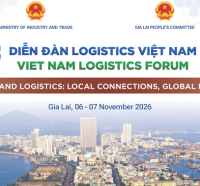
Viet Nam Logistics Forum 2026 (06 - 07 November 2026)
Why it matters: The forum will take place in Gia Lai Province, Viet Nam under the theme “Connecting Highland Logistics, Reaching Out to Global Value Chains”. Organised by the Ministry of Industry and Trade, the forum will bring together government representatives, industry leaders and logistics businesses to discuss policy reform, infrastructure development and digital transformation. Discussions will focus on improving connections between the Central Highlands’ production areas, border crossings and seaports, as well as developing agricultural logistics to support exports. A dedicated session will also explore logistics cooperation between Cambodia, Laos and Viet Nam. The forum aims to reduce transport costs, strengthen regional connectivity and improve Viet Nam’s participation in international supply chains. Source: Viet Nam Logistics Forum 2026
