

THE PAST WEEK
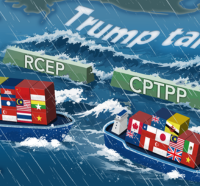
CPTPP and RCEP offer alternatives to US trade unpredictability
The unpredictability of the US market under the second Trump presidency has encouraged Asian exporters to seek alternative export markets. Many are now seeking to take advantage of the tariff reductions and trading preferences offered by two mega-regional trade pacts: the Comprehensive and Progressive Agreement for Trans-Pacific Partnership (CPTPP) and the Regional Comprehensive Economic Partnership (RCEP). Read more.
Summary: ASEAN economies remain central to both mega-trade pacts. While RCEP currently includes all the ASEAN Member States except the regional bloc’s newest member, Timor-Leste, the CPTPP currently includes Malaysia, Brunei Darussalam, Vietnam, and Singapore. Instability in the multilateral trading system has encouraged new ASEAN applicants for the CPTPP, with the Philippines, Indonesia, and Cambodia having all applied to join, while Thailand has also expressed interest. While at a macro level, intra-pact trade volumes remain modest, both agreements have had a significant impact on trade between countries that were previously not co-signatories to a trade agreement.

Vietnam welcomes record 21.2 million foreign arrivals in 2025
In 2025, Vietnam welcomed 21.2 million foreign arrivals, a 20% increase year-on-year. This marked the highest annual figure so far. Furthermore, in the first five months of 2026, Vietnam received nearly 10.7 million international visitors, up 20.7% year-on-year. Read more.
Summary: Tourism has been identified by the Vietnamese government as a new engine of growth, with annual tourism revenue rising from around VND 96 trillion (USD 3.65 billion) in the 1990s to surpassing VND 1 quadrillion for the first time in 2025. According to the ASEAN Secretariat, Vietnam recorded the fastest growth in international visitor arrivals in Southeast Asia in 2025. With 21.2 million international visitor arrivals, Vietnam outpaced Singapore and Indonesia to rank third within ASEAN, behind only Malaysia and Thailand.

Layoffs top 23,000 between January and May 2026
According to Indonesia’s Ministry of Manpower, some 23,470 workers were laid off between January and May 2026, while more than 88,000 workers lost their jobs in the whole of 2025. Read more.
Summary: Economists warn that Indonesia's continuing wave of layoffs risks turning into a broader economic slowdown due to weakening household purchasing power (with household consumption remaining the largest contributor to GDP growth). Economists have also noted the paradox of Indonesia’s high number of layoffs and solid GDP growth numbers, suggesting that economic growth is failing to generate enough employment. This has been attributed to the collapse of labour-intensive industries such as textiles, garments, and footwear due to high energy costs, weakening industrial competitiveness, regulatory uncertainty, and an influx of cheap imported goods.

World Bank elevates Philippines and Vietnam to upper-middle-income status
The World Bank has elevated the Philippines and Vietnam to upper-middle-income status after both countries' gross national income per capita surpassed the World Bank’s USD 4,636 threshold for the category. Vietnam’s national income per capita reached USD 4,970 in 2025, while the Philippines reached USD 4,850. Read more.
Summary: In a release on 1 July, the World Bank cited Vietnam’s export-led growth model and the Philippines’ broad-based expansion “reflecting gains across all major industries, not a single sector boom, but an economy-wide shift”. While an upgrade means both countries will find it harder to continue accessing low-interest development funding, they might also gain from stronger fundamentals and improved market access.

Consumer price index in Thailand decelerates for second straight month in June
The consumer price index in Thailand rose 2.42% year-on-year in June, slowing down from the 2.79% rise measured in May. This is the second straight month headline inflation has slowed down in Thailand. Read more.
Summary: The softer headline inflation figures in June suggest the inflationary impact of this year’s oil shock may have peaked in April, helping ease concerns that higher energy costs would become entrenched in Thailand. The figures also bolster the Bank of Thailand’s argument that the rise in inflation is only temporary and does not warrant a rate hike. Policymakers at the central bank left the benchmark interest rate unchanged at 1% for a second consecutive meeting in June.

Ringgit poised for rebound after ending June as Asia’s worst performing currency
Economists believe that the ringgit is poised for a rebound after ending June as Asia’s worst performing currency. This is attributed to Bank Negara Malaysia (BNM) stepping up measures to encourage the repatriation and conversion of companies’ overseas earnings, as well as the country’s strong economic fundamentals. Read more.
Summary: According to the Royal Bank of Canada, the ringgit may trade at 3.95 per dollar by year-end, while Australia & New Zealand Banking Group sees the ringgit strengthening to 3.80, which would be the highest since 2015. The ringgit has outperformed all regional peers after BNM pledged on 24 June to intensify efforts to boost inflows. Economists also note that the ringgit should be bolstered by Malaysia’s trade surplus (reaching a record monthly high of MYR 40 billion in May) and sustained foreign demand for local bonds.
STRATEGIC INSIGHTS
The unpredictability of US trade policy under the second Trump presidency has caused exporters in Asia to seek alternative markets, with many exporters now taking advantage of the tariff reductions and trading preferences offered by two mega-regional trade pacts: the Comprehensive and Progressive Agreement for Trans-Pacific Partnership (CPTPP) and the Regional Comprehensive Economic Partnership (RCEP). ASEAN economies remain central to both trade pacts - RCEP currently includes all the ASEAN Member States except Timor-Leste, while the CPTPP includes Malaysia, Brunei Darussalam, Vietnam, and Singapore. Instability in the multilateral trading system has encouraged new ASEAN applicants for the CPTPP, with the Philippines, Indonesia, and Cambodia having all applied to join, while Thailand has expressed interest as well.
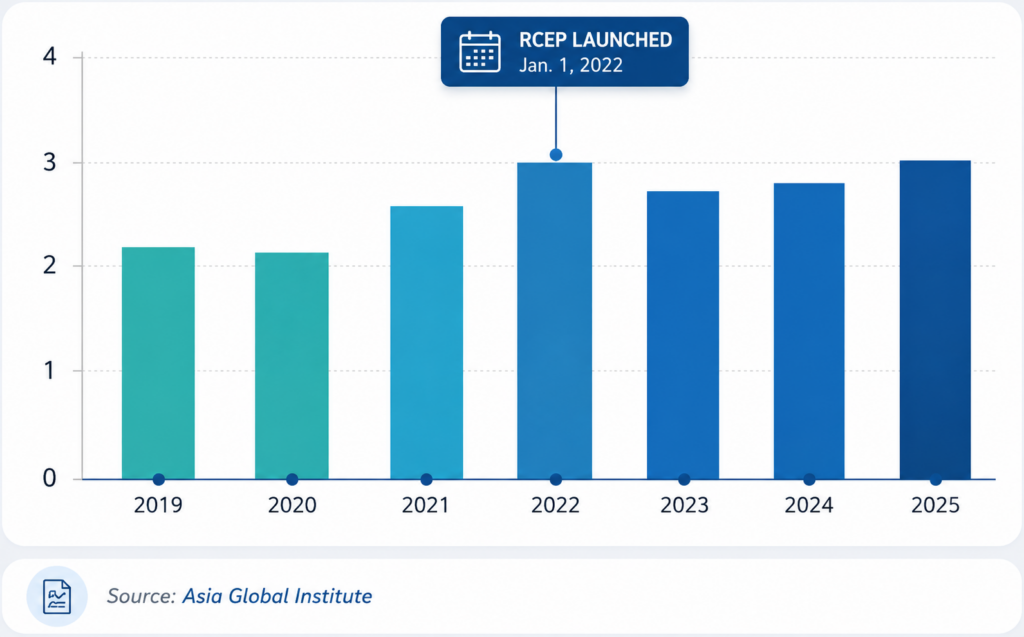
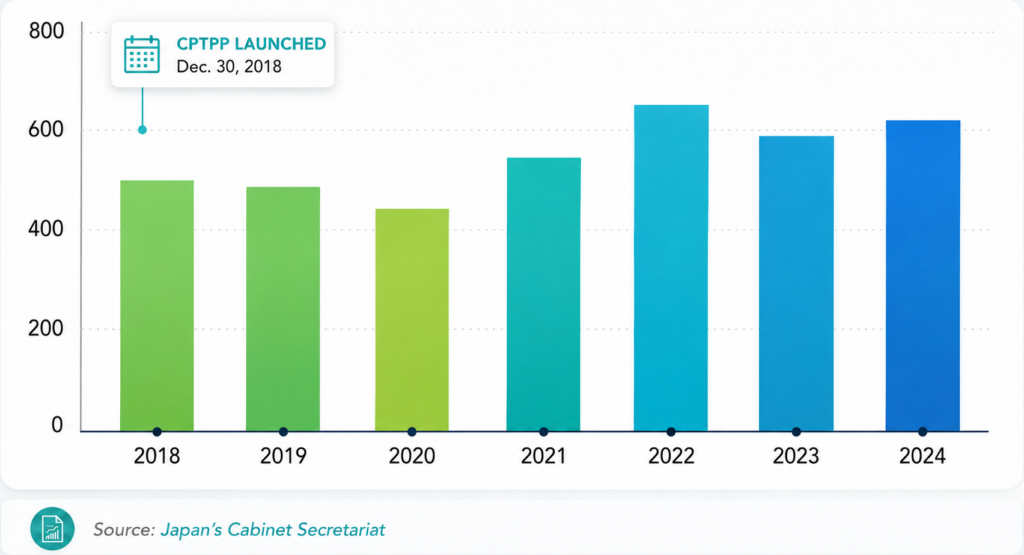
On a macro level, neither pact has had a major impact on intra-pact trade volumes (although the data was skewed in part by the COVID-19 global pandemic). Nonetheless, they have had a significant impact on trade between countries that previously lacked a trade pact link. The relatively lax rules of origin of both agreements have also had a significant impact on bilateral trade volumes. Analysts argue that member economies must do more to make local companies aware of the trade benefits being offered by both trade pacts.
Total intra-RCEP bloc exports (USD trillions)
Total intra-CPTPP bloc exports (USD trillions)
THE WEEK AHEAD: STRATEGIC WATCHLIST

State election in Johor state, Malaysia (11 July 2026)
Why it matters: The upcoming state polls in Johor state will serve as a barometer for the long-term survival of Prime Minister Anwar Ibrahim’s unity government. One of the component coalitions in Anwar’s government, Barisan Nasional (BN), is contesting in the Johor state election to strengthen its hand at the federal level (BN currently rules the state with a supermajority). Should either BN or Anwar’s own coalition fare poorly in the state polls, it could lead to the fraction of the unity government, with a larger impact on the economy and investor sentiments towards Malaysia.
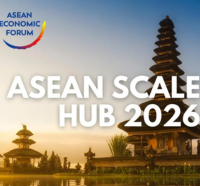
ASEAN ScaleHub 2026 (15 - 17 July 2026)
Why it matters: Held in Bali and bringing together startups, investors, government agencies, accelerators, and technology channels, ASEAN ScaleHub 2026 is a regional platform and flagship event designed to support growth-stage startups and scale-ups in expanding across the region.
Source: ASEAN Scale Hub - AEF
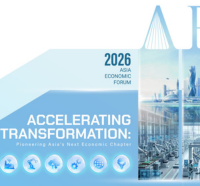
Asia Economic Forum (AEF) 2026 (15 July 2026)
Why it matters: To be held at the InterContinental Kuala Lumpur, the forum will be held under the theme of "Accelerating Transformation: Pioneering Asia's Next Economic Chapter". The forum intends to explore the forces reshaping growth in Asia, including AI integration, ESG-driven capital, elite talent acquisition, and the reinvention of regional business ecosystems.
