

THE PAST WEEK

Malaysia’s economy picks up pace, grows at faster-than-expected 6% in 2Q
Malaysia’s economy grew 6% in the second quarter, well ahead of advance estimates and forecasts, accompanied by a 57% surge in E&E exports as the global AI cycle fills order books 12-18 months ahead. Read more.
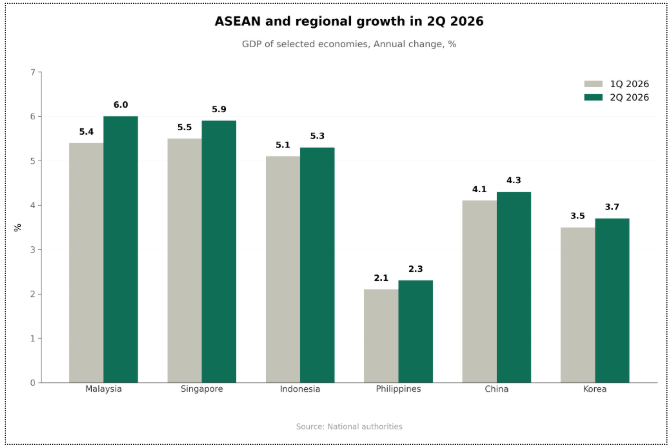
Summary: Bank Negara reported on 14 August that the economy grew 6.0% year on year in the second quarter, above its own 5.8% advance estimate and the median forecast in a Reuters poll, and up from 5.4% in the first quarter, taking first-half growth to 5.7%.
The growth engine was driven by E&E exports, up 57.1% y-o-y against 23% in the first quarter, with Governor Abdul Rasheed Ghaffour crediting the global AI cycle and Malaysia’s position in semiconductor manufacturing, advanced packaging and electronics manufacturing services, and reporting order books now stretching 12 to 18 months ahead.
The central bank kept its full-year forecast at 4% to 5% while saying growth would probably land around 5%, with headline inflation at 1.9% in the quarter against a 1.5% to 2.5% projection for the year, and indicated that strong growth on its own would not prompt a rise in the policy rate.
China-Asean trade ties deepen as supply chains, connectivity and businesses strengthen
Chinese customs data put China-ASEAN trade up 18.2% in the first half of 2026, with intermediate goods making up two-thirds of the total. Read more.
Summary: Xinhua reports that China-ASEAN trade reached 4.34 trillion yuan in the first half of 2026, up 18.2% y-o-y, with trade in intermediate goods (e.g. parts, components, production inputs) up 24.5% to 2.86 trillion yuan, or roughly two-thirds of the bilateral total.
It credits RCEP's rules of origin, under which materials from one member count as originating in whichever member does the manufacturing, alongside expanding transport links: the China-Laos Railway carried 17.17 billion yuan of imports and exports in the first half, up 33.8%, and the 134.2 km Pinglu Canal in Guangxi began vessel trials on 12 August ahead of a September opening that will cut more than 560 km from the inland-water route from parts of southwest China to the sea.
The piece also highlights two forward-looking points:
- The China-ASEAN Free Trade Area 3.0 Upgrade Protocol, signed in October 2025 and covering nine areas including the digital economy, green economy and supply-chain connectivity, is still in domestic approval and not yet in force; and
- A UOB survey of 380 executives at medium and large Chinese firms found 80% planning to do business abroad within three years, naming Malaysia (56%), Singapore (54%) and Thailand (51%) as the preferred destinations.
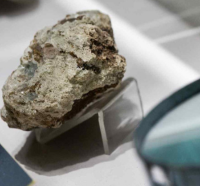
Chinese rare-earth project in Laos stumbles as industry rakes in profits
Two Shanghai-listed miners have halted their Lao rare-earth venture for unspecified reasons, in the same weeks that Chinese rare-earth producers report their strongest half-year yet. Read more.
Summary: Chifeng Jilong Gold Mining and Xiamen Tungsten, both Shanghai-listed, have suspended the rare-earth joint venture they have run since 2022 in the north-central Lao province of Xiangkhouang, citing 'relevant policy requirements regarding the development of rare-earth resources' and a wish to keep all activity 'in compliance with the law', though neither would tell Nikkei which requirement was at issue.
The venture's trial production permit expired on 27 December 2025 and its exploration right runs to 20 April 2027, with both partners now seeking an extension, on a project that booked 152.58 million yuan (US$22.60 million) of revenue in 2025 and 42.65 million yuan in the first quarter of 2026.
The halt marks an odd-contrast with the industry's results: Xiamen Tungsten expects first-half net profit up 129% to 2.21 billion yuan on higher praseodymium-neodymium oxide prices and calls the Laos impact ‘relatively small’, while China Northern Rare Earth, Shenghe Resources and two listed arms of China Rare Earth Group have all posted or forecast sharp first-half gains.
The Stimson Center identified at least 26 rare-earth mines operating in Laos from satellite imagery in a report last November, the first of them opened in 2022, roughly a year after the Myanmar coup, 'which likely pushed China's rare-earth mining activity into Laos', with miners drawn by weak land tenure rules and little oversight from national ministries in Vientiane.

Thailand Denies Reports It Planned to Use Security Cooperation as US Tariff Leverage
Bangkok has ruled out putting its security relationship with Washington on the table in tariff talks, a day after Bloomberg reported it was preparing to do just that. Read more.
Summary: Government spokesperson Rachada Dhanadirek said on Wednesday 12 August that security cooperation would be kept out of Thailand's tariff negotiations with the United States, that Cobra Gold and other military exchanges will proceed as planned, and that ‘the government will not trade one national interest for another’. Her statement answered a Bloomberg report of the previous day, citing an unnamed Thai official, that Bangkok was preparing a broadly worded warning that it could reconsider joining joint military activities if higher US tariffs caused serious economic damage, with reciprocal trade talks due to resume later this month.
Thailand has been negotiating since April 2025, when it was hit with a 36% tariff, cut to 19% under an October framework in which it promised to remove barriers on roughly 99% of US goods; the talks have since been unsettled by the Supreme Court striking down the ‘liberation day’ tariffs in February and by USTR's turn to Section 301, under which Thailand faces a threatened 12.5% forced-labour tariff and an investigation into 'structural overcapacity' in vehicles and parts, machinery and rubber products.
The alliance has been drifting since the end of the Cold War while Thailand built closer political, economic and security ties with China, so an explicit link between tariffs and the security relationship would have been a provocative move, and one observer quoted in the article said it would confirm ‘that the alliance is dead and buried.
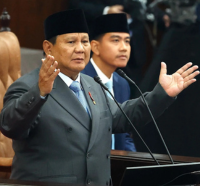
Indonesia’s Prabowo Subianto retreats on commodities reform amid market pressure
Prabowo has pulled the state commodities agency back to a monitoring role after a rout that has taken 26% off the Jakarta index this year, while still promising a commodities exchange by January. Read more.
Summary: In two addresses to parliament on Friday 14 August, Prabowo Subianto said the state-owned commodities export agency he established in May would monitor transactions rather than conduct trades itself, stepping back from a plan that would have reshaped export flows in the world's largest exporter of nickel, thermal coal and palm oil and cut across the global trading houses.
The climbdown follows a 26% fall in the Jakarta Composite so far this year and a 6% decline in the rupiah, with the index closing about 1.6% higher on the day and miners including Vale Indonesia, Alamtri Resources and Aneka Tambang among the biggest gainers; his budget speech set a 2027 fiscal deficit of 2.4% of GDP, against 2.85% forecast for this year and a self-imposed 3% ceiling, without saying how it would be reached. He kept the wider ambition intact, promising a commodities exchange by January because Indonesia 'must also determine global commodity prices', citing $5bn of potential savings the agency had identified from pricing discrepancies, and defending the free meals programme now costed at $12.8bn after being cut from an initial $28bn, at a moment when a July poll by Saiful Mujani Research and Consulting put satisfaction with him at 51%, down from about 81% late last year.

China’s Drive for Food Self-Sufficiency: What It Means for ASEAN Countries
As China closes in on self-sufficiency in rice, pork and poultry, Laos, Cambodia, Thailand and Myanmar, which send between 30% and 80% of their agrifood exports to the Chinese market, remain exposed. Read more.
Summary: Beijing's 2026 No. 1 Document and the agricultural plan in its five-year plan for 2026 to 2030 aim to cut import dependence by raising productivity, through biotechnology, improved genetics, precision agriculture, digital farming and alternative proteins, rather than by bringing more land into cultivation, an approach the authors compare to the industrial policies behind China's position in solar power, batteries and electric vehicles.
Rice, poultry, eggs and pork are already close to self-sufficiency and wheat and maize output is expected to rise substantially, while soybeans (111.8 million tonnes imported in 2025), beef, dairy and vegetable oils stay import-dependent on limited land and water, and China is expected to become a net poultry exporter by 2030. Exposure across ASEAN varies widely, from Laos at 60% to 80% of agrifood exports going to China, Cambodia at 35% to 45%, and Thailand and Myanmar at 30% to 40%, down to Malaysia at 15% to 20% and Indonesia at 10% to 15%; the authors recommend diversifying towards India, Africa, Japan, South Korea and the EU, moving into processed and certified products, and building an ASEAN early-warning system to track Chinese production and policy.
STRATEGIC INSIGHTS
Malaysia's 6.0% Q2 2026 GDP growth outpaces most ASEAN peers and significantly exceeds the official 5.8% advance estimate, accelerating sharply from Q1's 5.4%. Despite this robust performance, Bank Negara Malaysia retained its conservative 4-5% full-year forecast, though recent developments suggest growth could reach the upper end around 5%. This gap between actual and projected growth signals both upside surprise and underlying uncertainty about sustainability.
Two factors drive the momentum. Private investment exploded from 4.3% to 7.8% quarter-on-quarter, propelled by semiconductor manufacturing and data centre construction. Malaysia now hosts Southeast Asia's largest data centre infrastructure, which reflects genuine structural positioning in the AI investment cycle. Simultaneously, private consumption, accounting for 60% of GDP, remained resilient at 4.7%, supported by steady wage growth and government policy measures. Broad-based gains across both electronics (E&E) and non-electronics industries suggest momentum extends beyond tech concentration.
An important caveat for this boost remains. Malaysia is harvesting outsized gains from the global AI-chip demand surge and supply chain rebalancing away from China. However, the key vulnerability is that current growth reflects export quantity expansion, not value-chain deepening. Malaysia risks remaining locked in assembly and manufacturing, capturing less value than Singapore or South Korea, which control design and advanced capabilities. The 6% Q2 result is impressive but cyclical. It represents a temporary windfall rather than a structural shift in the economy.
Converting this momentum into durable competitive advantage requires moving upstream into semiconductor design and downstream into applications. This demands sustained R&D investment, talent pipeline development, and ecosystem deepening rather than just capacity expansion. Without this transition, when the AI cycle normalizes or supply chains rebalance again, Malaysia's growth could decelerate sharply. The real test for Malaysia is whether it builds structural capabilities to sustain competitive advantage beyond this technology upcycle, or whether it becomes merely another beneficiary of temporary global shifts.

THE WEEK AHEAD: STRATEGIC WATCHLIST
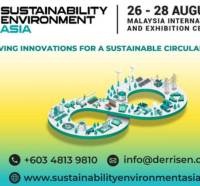
Sustainability Environment Asia (SEA) 2026 (26-28 August 2026)
Why it matters: The 4th edition of SEA, a business-to-business trade exhibition and conference covering the 'green transition' broadly such as sustainable energy, water/wastewater management, waste/circular economy, sustainable agriculture, green building, and environmental technology.
This signals how Malaysia is using green-industry convening power to advance its own net-zero and investment agenda, relevant if you're tracking how ASEAN states position themselves in the regional sustainability/trade competition.

1st Cambodia–Laos–Vietnam (CLV) Tourism Ministers’ Meeting (26 August 2026)
Why it matters: The inaugural Tourism Ministers’ Meeting under the CLV cooperation framework will focus on directions for strengthening tourism linkages, developing joint tourism products and promoting visitor exchanges among the three countries, followed by a press conference to announce the outcomes of the Meeting.

29th ASEAN Labour Ministers' Meeting (ALMM) (23-28 August 2026)
Why it matters: This is a ministerial-level meeting, where the actual labour ministers of all 11 ASEAN member states convene, alongside ASEAN+3 counterparts (China, Japan, South Korea), to set binding-in-spirit regional policy on workforce standards. It's built around the theme "Advancing ASEAN Human Capital: Skills Certification towards Global Recognition," aiming to strengthen cooperation on the skills, mobility, and competitiveness of more than 357 million workers across the region. It will be held at Dusit Thani, Bangkok, Thailand.
Thailand will present its initiative to advance the skills certification ecosystem through three pillars — an ASEAN Reference Curriculum Framework, ASEAN Skills Standards Certification, and ASEAN Centres of Excellence Certification — to be implemented under a three-phase framework spanning 2026–2030.
Source: https://www.bangkokpost.com/thailand/pr/3301640/thailand-to-host-29th-asean-labour-ministers-meeting

AIMX Singapore 2026 (26-27 August 2026)
Why it matters: This event highlights ASEAN’s growing ambition to move beyond simply adopting AI towards building its own AI capabilities and ecosystem. Discussions on embodied AI, infrastructure, talent, investment and cross-border collaboration are particularly relevant to Malaysia as it expands its data centre and digital infrastructure base. For ASEAN, the event raises a larger strategic question: whether the region can develop the compute capacity, talent and infrastructure needed to capture more value from the global AI economy, rather than remain dependent on imported technologies.
