
KUALA LUMPUR, 18 June 2026 - The Southeast Asian Futures Initiative Centre (SEAFIC) today convened its second SEAFIC-ASEAN Roundtable, “The Future of Jobs in ASEAN,” bringing together senior government officials, economists, policy researchers, industry representatives and academic experts for a closed-door discussion on the implications of rapid artificial intelligence adoption for labour markets, workforce competitiveness and human capital development across the region.
The roundtable session examined how AI-driven automation and augmentation are reshaping the nature of work, the composition of tasks within occupations, and the skills demanded by employers. Participants considered the extent to which technological advances may generate new employment opportunities while displacing existing forms of work, and assessed the readiness of ASEAN’s education and training systems to meet evolving workforce needs.
The discussion was anchored by two in-house presentations. The first, delivered by SEAFIC’s Senior Researcher, examined the implications of AI for jobs and tasks across ASEAN economies, with a particular focus on Malaysia. The paper argues that the central challenge posed by AI is not widespread job elimination but rather the reorganisation of tasks within occupations, and that the benefits of AI adoption are unevenly distributed across workers, sectors and income groups. It further notes that Malaysia, as a heavily service-centric economy, currently faces higher adjustment costs due to its concentration of rule-based occupations that are more exposed to automation by large language models.
The second presentation, delivered by a Senior Policy Fellow from the Economic Research Institute for ASEAN and East Asia (ERIA), drew on findings from ERIA’s recent publication Preparing ASEAN Talent for the Future of Work. It highlighted that attracting investment into ASEAN is no longer the primary challenge; the greater imperative is ensuring that these investments materialise into deep local capabilities and talent development. The presentation outlined a three-phase framework for ASEAN – spanning system foundation, scaling across firms and talent market integration – to align education and training with evolving industry demand, expand mutual recognition arrangements and enable greater cross-border talent mobility.
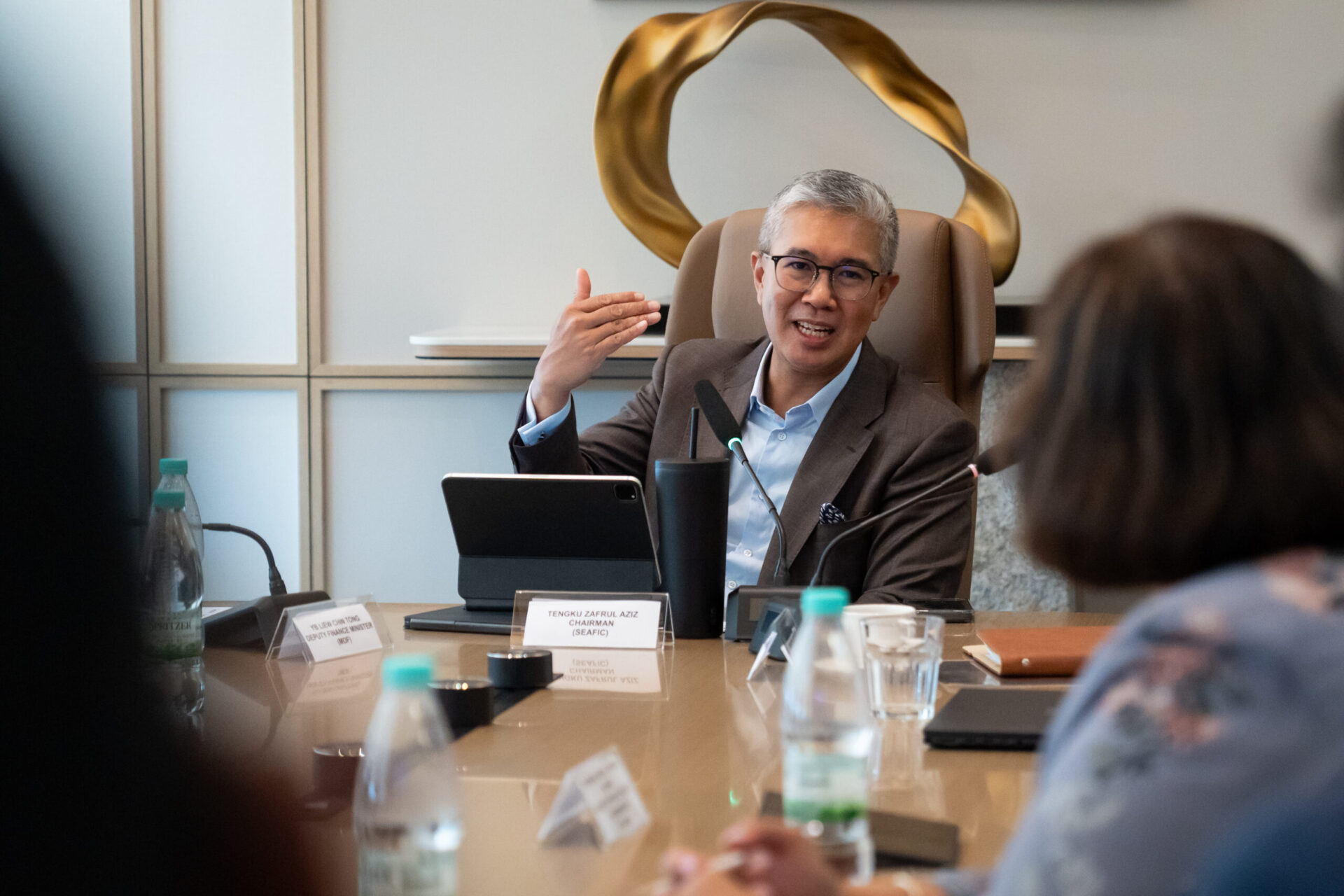
A moderated roundtable session followed, chaired by SEAFIC’s Chairman, Tengku Datuk Seri Utama Zafrul Aziz, and joined by the Deputy Minister of Finance and the Group Executive Officer of TalentCorp Malaysia. Participants examined how ASEAN must rethink its long-term development vision in the age of AI, moving beyond export-led industrialisation towards building a resilient regional middle class. The discussion also surfaced structural concerns, including the need to prevent youth unemployment, address gender disparities in workforce participation, strengthen digital ecosystems and cultivate indigenous technological capabilities rather than remain primarily adopters of foreign-developed technology.
A central conclusion from the discussion was that the challenge posed by AI is not simply one of job displacement, but of workforce transformation. Participants underscored that ASEAN’s long-term competitiveness will depend on its ability to invest in human capital, build robust pathways for reskilling and upskilling, and foster sustained collaboration across governments, educational institutions and industry.
The roundtable also noted the acute need for improved labour market data in Malaysia, including task-based datasets and greater visibility into the informal sector, to underpin more effective evidence-based policymaking. Participants identified improved access to affordable childcare and flexible work arrangements as concrete near-term levers to increase female labour force participation and household income across the region.

Two Wrongs Do Not Make A Right