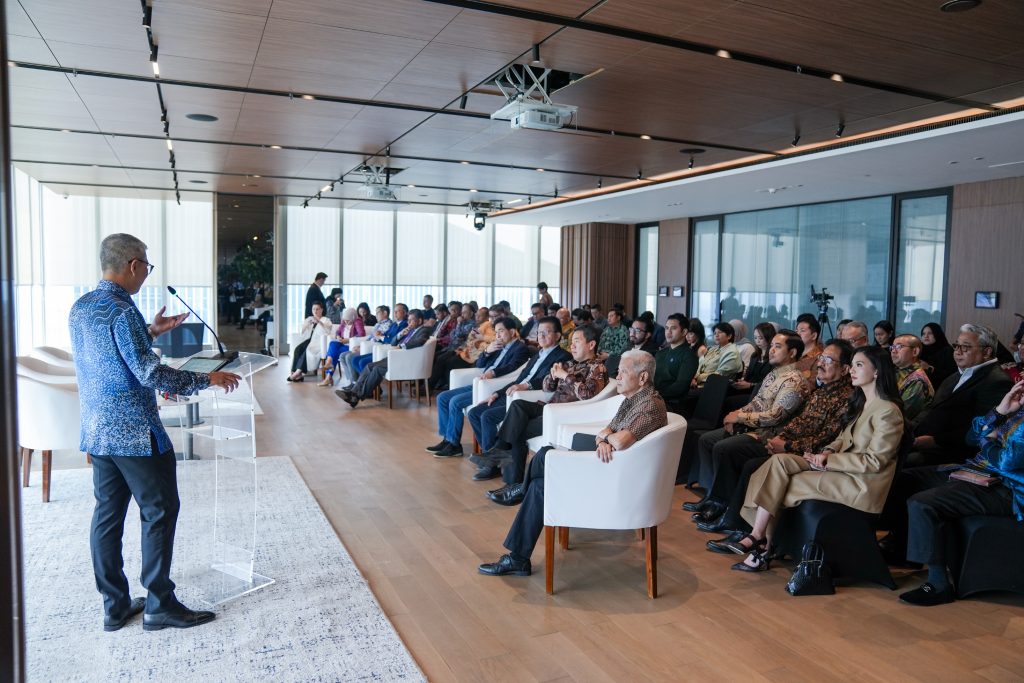
While the global stage feels increasingly like a battlefield of "superpowers gone wild," Southeast Asia is looking to write a different script. At the recent soft launch of the Southeast Asian Futures Initiative Centre (SEAFIC), a powerhouse panel of experts gathered to discuss whether the region can transform "geopolitical overload" into "geoeconomic opportunities." Moderated by Raline Shah, the discussion featured heavyweights from academia, government, and the private sector, all arriving at one singular conclusion: ASEAN must unite or be sidelined.
The Brutal New Reality
Laying out the global context, Professor Danny Quah of the Lee Kuan Yew School of Public Policy did not sugarcoat the situation, describing an era where the old rules of engagement are crumbling, and smaller states are staring at brutal realities. Nonetheless, despite the US-China rivalry intensifying, Professor Quah cautioned against basing whole strategies on this basis solely, as the US had essentially declared economic war against the rest of the world as well.
He argued that ASEAN can no longer rely on the status quo and must instead practice “active adaptation,” where it brings true free trade into the region that benefits its people, and stand firm on its principles of non-alignment and multilateralism. Professor Quah ended his segment by stressing that, collectively, ASEAN could achieve more than individual member states could.
Moving Beyond Business as Usual
Responding to a question on takeaways from the recently-concluded Indonesia Economic Summit, Pak Arsjad Rasjid of the Indonesia Business Council noted that while trade wars create obstacles, they also create a vacuum for supply chain relocation that Indonesia and ASEAN are ready to lead. However, ASEAN is not without its own challenges; Pak Arsjad highlighted frustrating bottlenecks currently holding the region back, such as restricted talent mobility even within the same company groups and unoptimized flight routes that cause unnecessary delays.
He reminded the audience that the lack of ASEAN-produced COVID-19 vaccines was a rude awakening for regional resilience. Pak Arsjad also offered his solutions, suggesting that sovereign wealth funds should collaborate to boost intra-ASEAN investment, which currently sits below 25%. As a final note for his segment, Pak Arsjad highlighted that the private sector is ever-ready to cooperate, but governments must pay attention; the time for business-as-usual is over, and there must be proactive measures to align, adapt, and mitigate. Ultimately, peace must come before prosperity, and all ASEAN member states must first be good neighbors.
The Malaysia Model & The "Man on the Street"
Tengku Zafrul Aziz, Chairman of the Southeast Asian Futures Initiative Centre, pointed to Malaysia’s recent Reciprocal Trade Agreement negotiations with the U.S. as a potential blueprint for ASEAN. He suggested that if ASEAN engaged global powers as a single, unified entity, its leverage would improve. This strategy requires consistency; whatever trade perks a member state offers to a global superpower should ideally be mirrored for their ASEAN neighbors.
Although he acknowledged that balancing the interests of different nations could be difficult, Tengku Zafrul believes that ASEAN centrality and solidarity would go a long way to improving ASEAN’s future engagements. Applauding Pak Arsjad’s idea of ASEAN-based sovereign wealth funds, Tengku Zafrul pointed out that there are also non-tariff barriers, such as the mobility and movement of talent and data within ASEAN, which would require collective political will to address if the new supply chains are to be as seamless and ASEAN-centric as possible. Tengku Zafrul also emphasized the critical role of independent research institutions in winning "hearts and minds," explaining that as much of the world turns inward, these institutions must help the person on the street understand why ASEAN remains relevant to their everyday lives.
The Bottom Line
The "Golden Decade" is not guaranteed; it must be built through intentionality, coordination, and solidarity. The consensus from the SEAFIC launch is clear: ASEAN’s strength lies in its centrality and collectivity. By integrating supply chains, pooling capital, and speaking with one voice, the region can turn external volatility into internal growth. As Malaysia and Indonesia continue to push for deeper integration, the world will be watching to see if the "ASEAN Way" can evolve into a competitive, modern economic powerhouse.
