
THE PAST WEEK
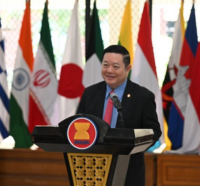
9th ASEAN Energy Outlook opens at the ASEAN Secretariat
ASEAN’s energy demand is set to quadruple by 2060, and cooperation is the plan to meet it. Read more.
Summary: ASEAN Secretary-General Dr. Kao Kim Hourn opened the 9th ASEAN Energy Outlook (AEO9) Exhibition at the ASEAN Secretariat in Jakarta on 24 November 2026, presenting it as the region's flagship, evidence-based guide to long-term energy planning. He noted that industrialisation, urbanisation, cooling needs and data centres are driving surging electricity demand, with AEO9 projecting energy demand could reach roughly four times current levels by 2060. Under its coordinated scenario, renewables could make up about 62 per cent of installed power capacity by then. Achieving this would require an average annual energy investment of around USD 405 billion through 2060, compared with roughly USD 246 billion invested last year alone. Dr. Kao stressed that no Member State can secure its energy future alone, citing the ASEAN Power Grid and Trans-ASEAN Gas Pipeline as strategic projects for connectivity, supply diversification and renewable integration. He called for stronger policy coordination, innovation and regional partnerships among governments, dialogue partners, financial institutions and the private sector, describing the future envisioned in AEO9 as ambitious but achievable.
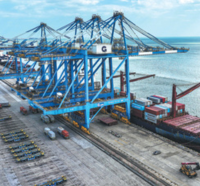
The ACFTA 3.0 takes the China-ASEAN trade beyond tariffs
An upgraded trade protocol to expand into the digital economy and green development, with a focus on MSMEs. Read more.
Summary: China and ASEAN will put the ACFTA 3.0 Upgrade Protocol into effect on 1 December 2026, shifting their trade relationship from the flow of production factors to the alignment of shared rules and standards. Signed in October 2025, the protocol extends the free trade area, initiated in 2002, into the digital economy, green development, standard setting and supply chain connectivity. Experts say it will deepen cooperation by leveraging complementary economic structures against external uncertainties, unlocking further growth. The trade backdrop is strong: China has been ASEAN's largest trading partner for 17 consecutive years, and bilateral trade topped USD 1 trillion in 2025, an 18-fold rise since 2002. The protocol also prioritises micro, small and medium-sized enterprises through digital transformation support and intellectual property capacity building, lowering compliance costs and easing entry into regional value chains. Early examples include a smart transportation platform from Nanning Rail Transit due in Khon Kaen, Thailand, in late December, and a digital human platform built with Malaysia's Zetrix AI Bhd to help smaller Chinese firms reach ASEAN users.
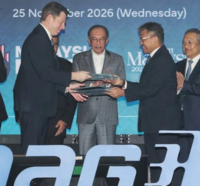
The US remains as Malaysia’s top trading partner
Malaysia seeks to maintain strong commercial relations with Washington while preserving its independent foreign policy. Read more.
Summary: Prime Minister Anwar Ibrahim reaffirmed that the United States remains Malaysia’s largest trading and investment partner despite escalating tariff disputes and geopolitical tensions, cautioning against underestimating the importance of bilateral economic ties. Speaking at Malaysia Aviation Group’s aircraft order announcement in Kuala Lumpur on 25 November, he highlighted Malaysia’s neutral foreign policy as enabling the country to maintain relations with major powers, including the US, China and Russia, while prioritising its national interests. He also noted that dialogue among major powers creates opportunities for middle-income countries such as Malaysia to pursue trade and investment. Citing Boeing’s involvement in the aviation sector, Anwar highlighted the importance of international commercial partnerships in supporting domestic industries. He reiterated that maintaining balanced diplomatic relations with international partners is essential to sustaining foreign trade, attracting capital inflows and supporting national prosperity.
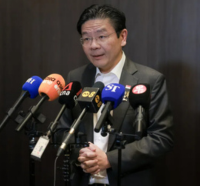
Singapore offers US cooperation on AI chip monitoring amid tighter export controls
PM Lawrence Wong aims to safeguard Singapore’s business standing while securing access to advanced semiconductors. Read more.
Summary: Singapore is prepared to facilitate US inspections of companies operating in the city-state to verify the use of advanced AI chips, following Washington’s tighter export controls on semiconductor shipments to Singapore, Malaysia, Thailand and Indonesia. The measures aim to prevent US-made chips from being diverted to China through overseas data centres. Prime Minister Lawrence Wong emphasised that Singapore would not enforce other countries’ export controls but would take action against businesses using the country to circumvent such restrictions or breach local laws. He added that the impact on Singapore’s chip transhipment volumes should be manageable, noting that only 1% of chips reported as sold to Singapore are actually used domestically. Singapore and the US will also explore arrangements to maintain trusted access to advanced American technologies for legitimate businesses.
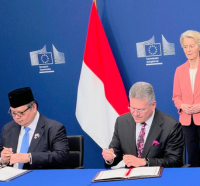
Indonesia and EU sign a landmark trade and investment agreements
Jakarta's terms with Brussels become the template other ASEAN capitals will be measured against in their own EU talks. Read more.
Summary: On 21 November 2026, Indonesia and the European Union signed the Indonesia–EU Comprehensive Economic Partnership Agreement (IEU-CEPA) and Investment Protection Agreement (IPA) in Brussels, Belgium, concluding more than a decade of negotiations. Under the IEU-CEPA, 90.4% of EU tariff lines for Indonesian exports will receive duty-free access once the agreement enters into force, while a further 8.37% will benefit from gradual tariff reductions over three to 15 years. Key Indonesian exports expected to benefit include palm oil and its derivatives, textiles, footwear and other commodities. The agreements also aim to expand European investment in Indonesia across strategic sectors such as electronics, electric vehicles, renewable energy and downstream industries. Between 2021 and 2026, EU investment in Indonesia reached US$14.8 billion. Both agreements are expected to strengthen investment flows, facilitate technology transfer and support domestic job creation.
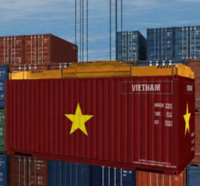
Viet Nam’s opening in fractured Asia-Pacific supply chains
A proposed neutral storage hub in Viet Nam would make Port Klang an overflow partner rather than a bystander. Read more.
Summary: Viet Nam could strengthen its position in regional supply chains by developing strategic storage capacity as businesses shift from just-in-time to just-in-case inventory strategies. Building on its USD164 billion in electronics exports in 2025 and 15.0% year-on-year growth in port throughput during the first five months of 2026, the country could expand bonded storage facilities, energy reserves and agricultural stockpiling. Proposed measures include extending petroleum reserves to liquefied natural gas, fertiliser and rice, as well as establishing port overflow arrangements with Singapore and Port Klang. Viet Nam's non-aligned foreign policy and extensive network of strategic partnerships could further support its positioning as a neutral regional storage hub. For Malaysia, this presents a potential opportunity for Port Klang to serve as an overflow partner, although this would require advance coordination with Malaysian port operators.

Washington Eyes 18% Tariff Cap on Malaysian Goods in New Overcapacity Crackdown
The US has proposed fresh tariffs of 20% to 40% on 14 major trading partners. Read more.
The Trump administration has proposed new tariffs on 14 major trading partners, including Malaysia, China, Japan and the EU, as part of a Section 301 probe into excess industrial capacity. Headline rates of 20% to 40% were floated, but duties would be capped at the lower levels agreed in existing or ongoing trade deals. Malaysia, along with Cambodia, Indonesia, Thailand and Bangladesh, would face an 18% cap. Japan, South Korea, Taiwan, the EU and Switzerland would see 15%, while Singapore would get 10%. China's cap is 20%, rising to 40% if the US-China truce, which expires on 10 January, collapses. India would face 17% with a deal or 25% without one. The measures won't take effect until after a 25 January public hearing. US Trade Representative Jamieson Greer said the caps align with earlier trade agreements. Beijing dismissed the "overcapacity" claim as a false issue but did not threaten retaliation.
STRATEGIC INSIGHTS
ASEAN's AI build-out buys gas before it buys solar
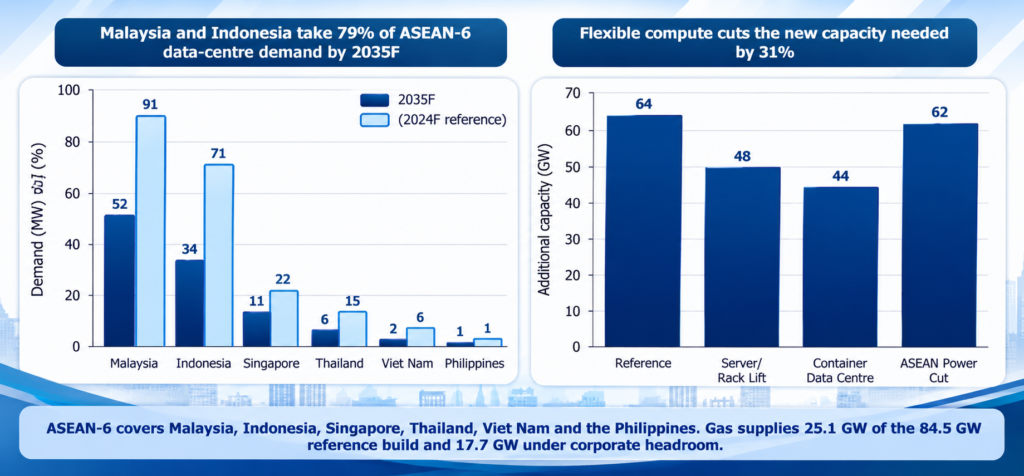
The ASEAN Centre for Energy (ACE) expects data centres in the six largest ASEAN economies to consume 202 TWh of electricity in 2035F in its reference case, against around 20 TWh across ASEAN in 2023, and it expects gas rather than renewables to supply most of the firm capacity built to serve that load.
Malaysia carries the largest share: 52 TWh in 2030F rising to 88 TWh in 2035F, a range of 77 to 119 TWh in ACE's low and high cases. Indonesia reaches 71 TWh and Singapore 22 TWh, while Thailand, Viet Nam and the Philippines stay below 14 TWh in every case. Serving the reference case needs 64.5 GW of additional generation capacity across the six markets by 2035F, of which 25.1 GW is gas. Malaysia's own requirement is 42.1 GW, the largest in the region.
Pace is not the constraint. ACE puts data-centre demand alone at about 6.5 GW of new capacity a year to 2035, against the 12.1 GW these six countries added annually on average between 2005 and 2025. Lead times are the problem: a large facility takes two to five years from planning to operation, while generation, transmission and connection take five to eight years or longer, and GE Vernova's gas turbine backlog reached 116 GW in 2026, with reservations taken for 2031 delivery. The International Energy Agency (IEA) expects Southeast Asia's net fossil fuel import bill to rise from around USD80 billion in 2025 to more than USD170 billion in 2035F as the region turns from net gas exporter to net importer.
Flexibility changes the capital bill more than the carbon bill. ACE finds that shifting 20% of annual demand cuts the regional requirement to 53.3 GW, and that running compute 25% above and below average renewable output takes it to 44.4 GW and gas to 17.7 GW; for Malaysia, capacity falls to 28.7 GW and gas to 5.6 GW. Power-sector emissions barely move across those cases, from about 2,588 MtCO2e to between 2,569 and 2,583 MtCO2e; only the ASEAN Power Grid case takes them to 2,519 MtCO2e. ACE notes that its Malaysian projection assumes every announced project is delivered in full and on schedule, with a saturation multiplier of 2.0, the largest it applies to any market. Suruhanjaya Tenaga and the Data Centre Task Force decide whether connection approvals price flexibility, the lever that changes how much gas Malaysia has to build.
Where ASEAN's data-centre load lands, and what it takes to serve it
THE WEEK AHEAD: STRATEGIC WATCHLIST
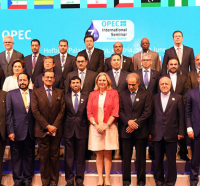
42nd OPEC and non-OPEC Ministerial Meeting (29 November 2026)
Why it matters: This meeting fixes 2027 production baselines, drawing on the maximum sustainable capacity assessment the group has run through the year. Baselines set quotas, and quotas decide whether the voluntary cuts begin to unwind. Most of Southeast Asia buys oil rather than sells it, and Philippine inflation reached 7.2% year-on-year in September 2026 on oil and transport costs. Malaysia and Brunei sit on the other side of the trade, with Petronas dividends and Brunei's fiscal revenue both tracking crude. Source: OPEC
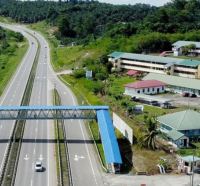
32nd ASEAN Transport Ministers Meeting (3 December 2026 - 4 December 2026)
Why it matters: Thailand's Cabinet approved the draft Memorandum of Understanding on the Development of the ASEAN Highway Network on 24 November 2026 for signature at this meeting, and Timor-Leste's Council of Ministers authorised its transport minister to sign the same instrument, covering the AH153 route between Kupang and Dili. The ministers meet their Chinese, Japanese and Korean counterparts over the same two days, under the ASEAN Transport Sectoral Plan 2026-2030 that carries the ASEAN Single Aviation Market and the ASEAN Single Shipping Market. Source: Bernama

4th ASEAN-Korea Free Trade Agreement Joint Committee (7 December 2026 - 11 December 2026)
Why it matters: Round two of the talks to upgrade the ASEAN-Korea Free Trade Agreement (AKFTA) ran in Singapore from 28 September to 1 October 2026, and the next round moves to Korea. The negotiation covers 13 areas, among them critical minerals and supply chains, digital trade, intellectual property and origin procedures, with both sides aiming for rules above the Regional Comprehensive Economic Partnership standard and substantial conclusion by the end of 2027. President Lee Jae Myung told the Manila summits on 16 November 2026 that the upgrade should deliver USD300 billion in annual two-way trade. SEAFIC expects movement on critical minerals and origin procedures, the two chapters with direct bearing on ASEAN processing investment. Source: Vietnam Ministry of Industry and Trade
