

THE PAST WEEK

Will Southeast Asia Actually Benefit From Its AI Boom
Southeast Asia is now building roughly half of Asia-Pacific's data-centre pipeline. This piece dives into whether the region will capture an AI economy to match the capacity it hosts. Read more.
Summary: Asia-Pacific's data-centre development pipeline reached 26.5 GW in the first half of 2026, with Southeast Asia accounting for about half, led by Malaysia with 1,039 MW under construction and Thailand with 859 MW. Markets are specialising: Singapore keeps the largest operational base in Southeast Asia at 1.46 GW but is limited by power, land and sustainability rules, and on 21 August provisionally awarded 200 MW to four operators under its second data-centre call, while Malaysia, Thailand, Indonesia and Vietnam pursue scale, with CoreWeave planning a 360 MW deployment in Greater Jakarta and Vietnam now allowing wholly foreign-owned data centres.
On 1 August SoftBank's Singapore subsidiary signed a memorandum with SC ZEUS and Robust HPC to develop AI data-centre capacity across Malaysia, Thailand, Indonesia and Vietnam. The constraints are physical: Malaysia and Thailand face grid connection and transmission limits, Johor's water supply is under pressure, and in early September Thailand halted work on about 49 projects under construction and froze approvals for about 117 more pending national rules. The article warns that the region risks repeating the electronics-assembly pattern, hosting the hardware while design and chip-making value sits elsewhere, and urges governments to seek commitments on local skills, research partnerships, supplier development and computing access for domestic firms. It points to the ASEAN Power Grid for cross-border electricity trade and to the ASEAN Digital Economy Framework Agreement for common rules, with Singapore's 2027 ASEAN chairmanship as the moment to push the agreement's adoption.
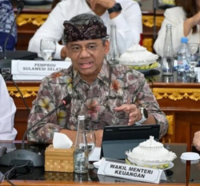
Indonesia Replaces Finance Minister Amid Growing Investor Skepticism
Prabowo has removed Finance Minister Purbaya Yudhi Sadewa after just over a year and installed technocrat Suahasil Nazara, a move read as an attempt to steady investors after downgrades and a record-low rupiah. Read more.
Summary: Suahasil, 55, deputy finance minister since 2019, was sworn in with an instruction from Prabowo to protect "the health and credibility" of the state budget; the government gave no public reason for Purbaya's removal. Purbaya had replaced Sri Mulyani Indrawati in September 2025, reportedly after she resisted the expansive spending, including the multibillion-dollar free meals programme, that Prabowo wants for his 8 per cent growth target. The change follows the July 2026 resignation of Bank Indonesia Governor Perry Warjiyo two years before his term ended. Investor confidence had been sliding since Moody's and Fitch downgraded Indonesia in March 2026, with Fitch citing "increasing policy uncertainty" and "growing centralization of policymaking authority", and MSCI has threatened a downgrade over free float and ownership concentration on the stock market. The rupiah passed 18,000 to the dollar in June, and rising fuel subsidy costs pushed the deficit towards the legal 3 per cent of GDP ceiling, while Purbaya's April suggestion of levies on ships in the Malacca Strait had to be walked back by the Foreign Ministry. Suahasil has pledged to keep the deficit under the ceiling and describes his approach as "a continuation, not a change", and Richard Borsuk of the S. Rajaratnam School called the appointment a "good move" that markets and rating agencies should welcome.
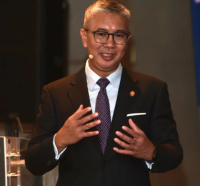
Tengku Zafrul: Asean’s next integration phase could draw on NIMP 2030 principles
Malaysia's investment chief proposes that Asean's next stage of integration follows the NIMP 2030 model: judge investment by the know-how, stronger firms and skilled workers it leaves behind, not by the dollar figure alone. Read More.
Speaking in Singapore at the 2026 China-Asean Business Leaders Summit, SEAFIC Chairman Tengku Zafrul Abdul Aziz said Asean's next stage of integration could borrow from Malaysia's New Industrial Master Plan 2030. That plan, launched in 2023, sits within the Madani Economy framework and aims to raise economic complexity, speed up technology adoption, push towards net zero and protect economic security and inclusivity. He said Asean sits astride some of the world's most important trade routes, with large consumer markets, abundant resources, growing digital economies and diverse talent. The region drew US$226 billion in foreign direct investment in 2024, nearly double the 2015 level, but "the key question is what that investment brings to our people". Manufacturing still matters most, he argued, because "done right, an investment leaves a legacy of know-how, stronger firms and better-skilled workers", and that principle should guide Asean's development. His speech, titled "Beyond Profit: Closing the Wealth Gap as Asean and China's Greatest Competitive Advantage", argued that Asean and China should use their different strengths and stages of development so that integration builds wealth for people and firms, not only growth.
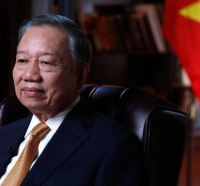
Vietnam Leader Says US Deal Close, Denies Re-Routing China Goods
To Lam says the trade deal with Washington is "very close", promises to buy more American aircraft and high-tech goods, and insists Vietnam will not serve as a back door for Chinese exports. Read more.
Summary: Speaking to Bloomberg TV on the sidelines of the UN General Assembly on Monday, ahead of meetings with Trump administration officials in New York, Vietnam's president said "the major issues have fundamentally been solved and agreed from both sides". He said one item for discussion with US leaders, and the president in particular, is "how to expedite negotiations toward an agreement on reciprocal, balanced and equitable tariffs between the two countries". On the trade imbalance, he said Vietnam understands US concerns and sees "opportunities to address" the gap, chiefly by importing more advanced technology and high-tech equipment, including aircraft, as the country builds its science and technology sectors. On the charge that Chinese goods are relabelled and shipped on through Vietnam, he said: "We also affirm that we do not accept trans shipments of goods. Trade must be genuine with products actually manufactured in Vietnam." Asked about Vietnam's 10 per cent growth target, he said the leadership is "fully confident that we can achieve these goals". The interview came as Hanoi negotiates under the threat of new US tariffs, with trade officials handling the talks while Lam meets US businesses in New York before travelling on to Canada.
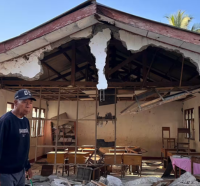
Indonesia quake aftermath exposes fault lines in Prabowo's economic plans
A Flores village hit by Indonesia's deadliest earthquake in nearly four years has less than US$8 per resident to rebuild with, after Prabowo redirected village and regional funds towards his flagship programmes. Read more.
Summary: The magnitude 7.7 quake killed 129 people, and in Satar Punda, a village of nearly 2,500 whose own office was badly hit, chief village elder Fransisko Edwin Budiman received only 342 million rupiah in regular village funds this year, down from 965.7 million in 2025 and 1.2 billion in 2024, with much of it already committed to routine costs and central government priorities. The squeeze is national: the 2026 village fund allocation fell to 51.87 trillion rupiah from 69 trillion, but only 25 trillion is regular allocation across more than 75,000 villages, with the rest steered to the Red and White Cooperative programme, while transfers to provinces dropped 18 per cent to 661.6 trillion rupiah and Home Affairs Minister Tito Karnavian says only eight of 38 provinces are fiscally sound. Prabowo defends the cuts, saying "regional government funds were not well spent" and asking why villages that received around 1 billion rupiah a year still lack bridges costing 400 million. The head of Batu Cermin village has stopped weekly vitamin distribution to toddlers, pregnant women and older residents, a village head in flood-hit Aceh says the cooperative programme has not been a priority while residents rebuild, and North Maluku Governor Sherly Tjoanda says her province cannot pay non-civil-service wages. Wijayanto Samirin of the Paramadina Public Policy Institute calls the policy fiscal recentralisation that will raise logistics costs and inflation, warns that regional bonds would be "very dangerous", and Trisakti University's Trubus Rahadiansyah predicts greater resistance from regions in 2027 as local leaders fail to meet campaign promises. Nikkei links the strain to the wider picture: friction with the central bank, a rupiah at historic lows, negative outlooks from Moody's and Fitch, the finance minister's sacking this week, and Prabowo's approval falling from more than 80 per cent at the end of 2025 to just over half in July, according to Saiful Mujani Research and Consulting.
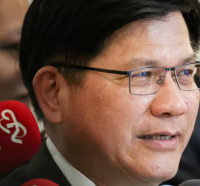
Taiwan confirms new Philippines office in works, China says move 'doomed'
Taiwan's foreign minister has confirmed that a representative office in Cebu is "in progress", and Beijing has warned Manila not to harm China–Philippines relations. Read more.
Summary: In a local radio interview, Foreign Minister Lin Chia-lung said the office in the southern province of Cebu will serve travellers and businesspeople in the central Philippines and help establish a "Taiwan-Philippines Economic Corridor", confirming Nikkei Asia's earlier report and adding to the existing Taipei Economic and Cultural Office in Manila. Chinese foreign ministry spokesman Guo Jiakun responded on Wednesday that the Democratic Progressive Party's attempts at "diplomatic breakthroughs" are "all in vain and doomed to fail", and urged Manila to "abide by the one China principle with concrete actions". Nikkei notes that the Philippines' own "One China policy", which recognises Beijing as the government of China, is distinct from Beijing's "One China principle", which asserts sovereignty over Taiwan, and Soochow University's Chen Fang-yu says such policies do not stop countries from developing substantive ties with Taipei. Ties have grown under President Ferdinand Marcos Jr., whose government eased restrictions on visits to Taiwan last year, waived visas for Taiwanese travellers and is moving to avoid double taxation, with more than 200,000 Filipino migrant workers now in Taiwan. Lin framed the relationship in supply-chain and first-island-chain terms, extending to Japan, and his July book describes relations with Manila as a step toward "defensive interdependence". Chen adds that China has recently pressed governments to close Taiwan's offices, as in Papua New Guinea and South Africa, and that "the primary catalyst driving this alignment is China's own coercive behavior".
STRATEGIC INSIGHTS
ASEAN’s Export Growth Is Increasingly Anchored in Manufacturing and Technology
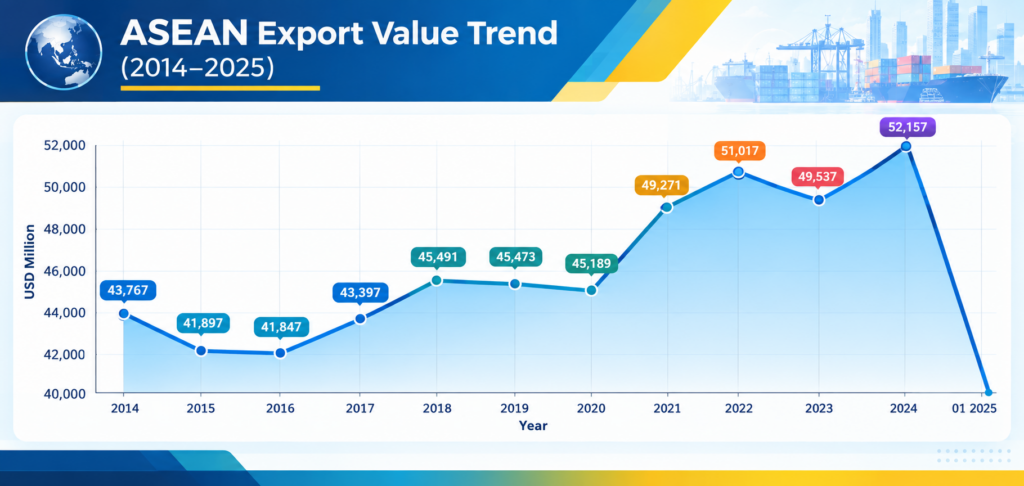
ASEAN’s export trajectory points to a regional economy that is becoming increasingly integrated into global manufacturing and technology value chains. After a relatively flat period between 2018 and 2020, ASEAN exports accelerated strongly, rising from US$1.39 trillion in 2020 to US$1.71 trillion in 2021, and reaching US$2.05 trillion in 2024. This represents an increase of around 47% from 2020, with exports growing by approximately 14% between 2023 and 2024 alone based on the figures shown.
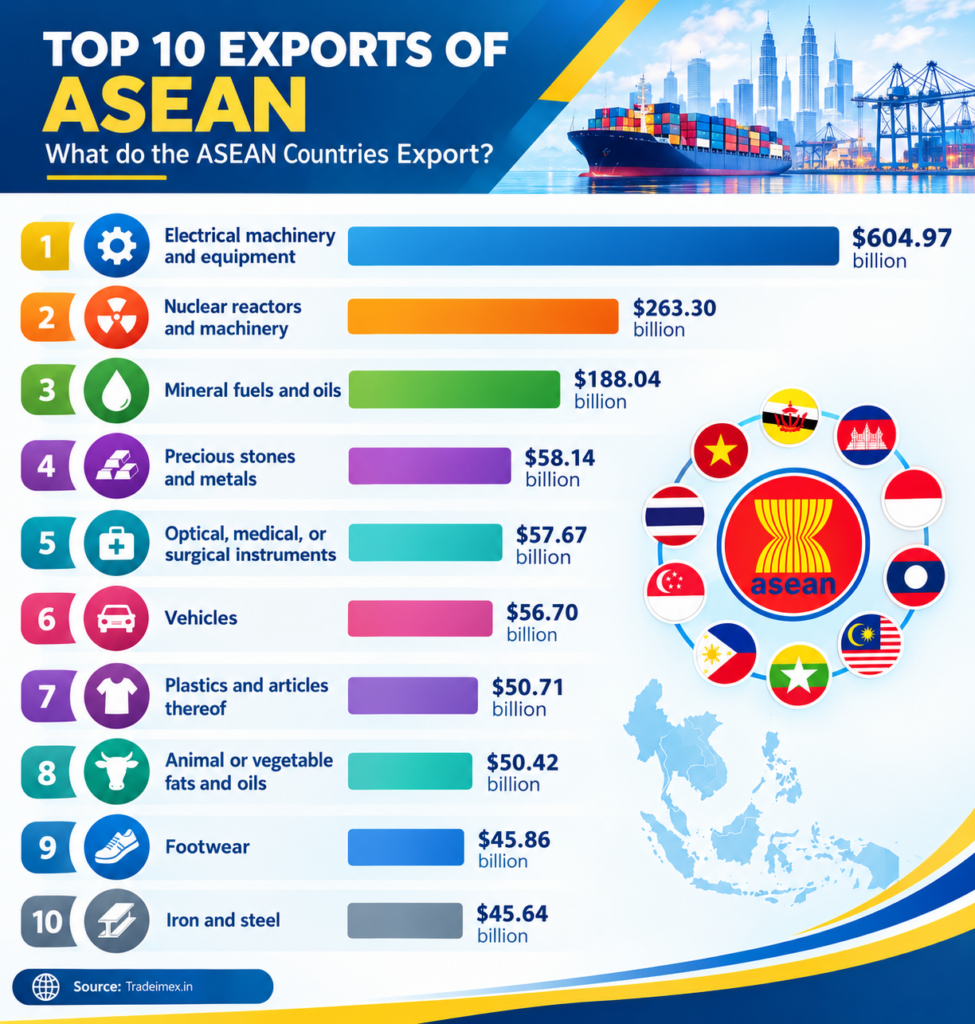
The composition of exports is particularly significant. Electrical machinery and equipment was ASEAN’s largest export category at US$604.97 billion, followed by nuclear reactors, boilers and machinery at US$263.30 billion, and mineral fuels and oils at US$188.04 billion. Together, these three categories account for approximately US$1.06 trillion, or more than half of ASEAN’s total exports in 2024. This concentration suggests that ASEAN’s export competitiveness is increasingly tied to industrial capacity, electronics, machinery and energy rather than primarily low-value commodity exports. OECD analysis similarly finds that machinery, electrical equipment and mineral products account for more than half of ASEAN merchandise trade.
The dominance of electrical machinery is particularly notable. At almost US$605 billion, it is more than twice the value of ASEAN’s second-largest export category. This reflects the region’s growing role in electronics and broader technology supply chains. Malaysia, Singapore, Thailand and Viet Nam are among the ASEAN economies participating in these value chains. Malaysia alone exported approximately US$121.1 billion of electrical machinery and equipment in 2024, illustrating how individual ASEAN economies contribute to the wider regional production ecosystem.
At the same time, the export structure highlights an important strategic consideration: ASEAN’s growth is concentrated in a relatively narrow group of industrial sectors. The top 10 categories shown amount to around US$1.42 trillion, equivalent to roughly 69% of the US$2.05 trillion total export value. The region therefore has substantial exposure to changes in global demand for electronics, machinery, energy and manufactured goods. The IMF notes that ASEAN’s electrical and electronics trade is being reshaped by changes in global value chains, including rising intermediate-input flows and greater domestic value-added participation
Source: TradeImeX, 2025
THE WEEK AHEAD: STRATEGIC WATCHLIST

10th Youth Economic Forum 2026 (03 October 2026)
Why it matters: Organized by the Perdana Fellows Alumni Association (PFAA), themed "Decoding the Next Decade: Advancing Malaysia's Economic Frontier," and drawing over 2,500 young professionals. Prime Minister Anwar Ibrahim himself is confirmed as closing keynote speaker which puts Malaysia's head of government directly in conversation with the next generation of the country's economic leadership.
For anyone tracking how Malaysia is shaping youth economic policy, talent development, and the next decade's growth narrative, this is a genuine agenda-setting moment, where the government, alongside business leaders and policymakers, publicly frames its vision for youth-driven economic transformation. Additionally, SEAFIC's Chairman, Tengku Zafrul Aziz will deliver a Special Leadership Address titled: The Next Generation Advantage: Powering Youths into New Champions.
As a knowledge partner, this puts SEAFIC directly inside that agenda-setting conversation where our own analysis of Southeast Asia's economic trajectory is worth noting for anyone tracking the institute's public engagement and policy visibility this quarter.

Realising an AI Nation (12 - 13 October 2026)
Why it matters: Organized by ISIS Malaysia, this conference goes beyond a typical tech seminar to tackle AI as a matter of national sovereignty and regional governance. It's framed around Malaysia's own AI Action Plan 2026-2030 and directly confronts the risk of "digital colonisation," where countries with limited AI infrastructure become dependent on a handful of dominant global players.
For anyone in policy, research, or industry tracking how Southeast Asia is positioning itself in the global AI order such as in sovereignty, governance frameworks, and the region's leverage with major tech powers are all genuinely on the table here, not just innovation buzzwords.
Source: https://www.isis.org.my/realising-an-ai-nation-conference/

4th ASEAN Women Leaders’ Summit (29 September - 01 October 2026)
Why it matters: It's set to produce a Joint Ministerial Statement on Women's Leadership for Inclusive Prosperity, embedding gender-equality commitments directly into ASEAN's post-2025 vision through 2045. It also feeds the Philippines' proposed ASEAN Declaration on Gender-Transformative Implementation and the new ASEAN Centre of Excellence on Gender Equality, both expected at the November leaders' summit which makes this the agenda-setting event those bigger outcomes depend on.
Source: https://pcw.gov.ph/fourth-asean-women-leaders-summit/
